
I DIALOGHI DELLE CARMELITANE

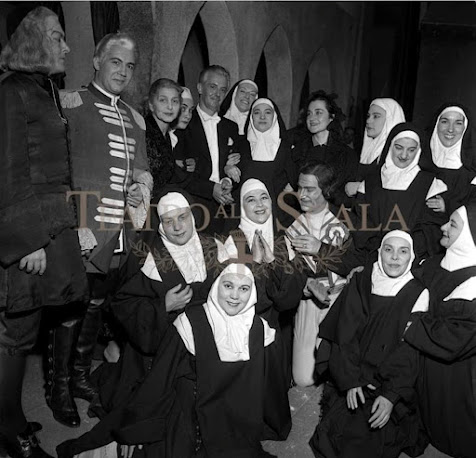
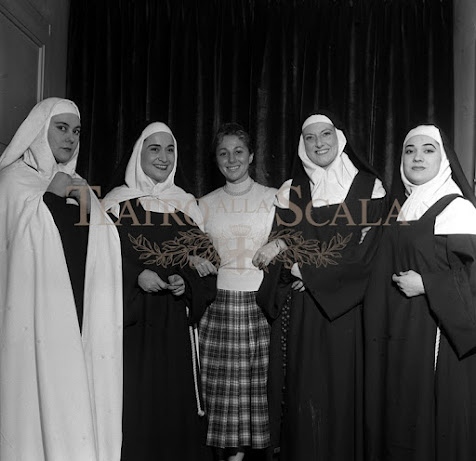
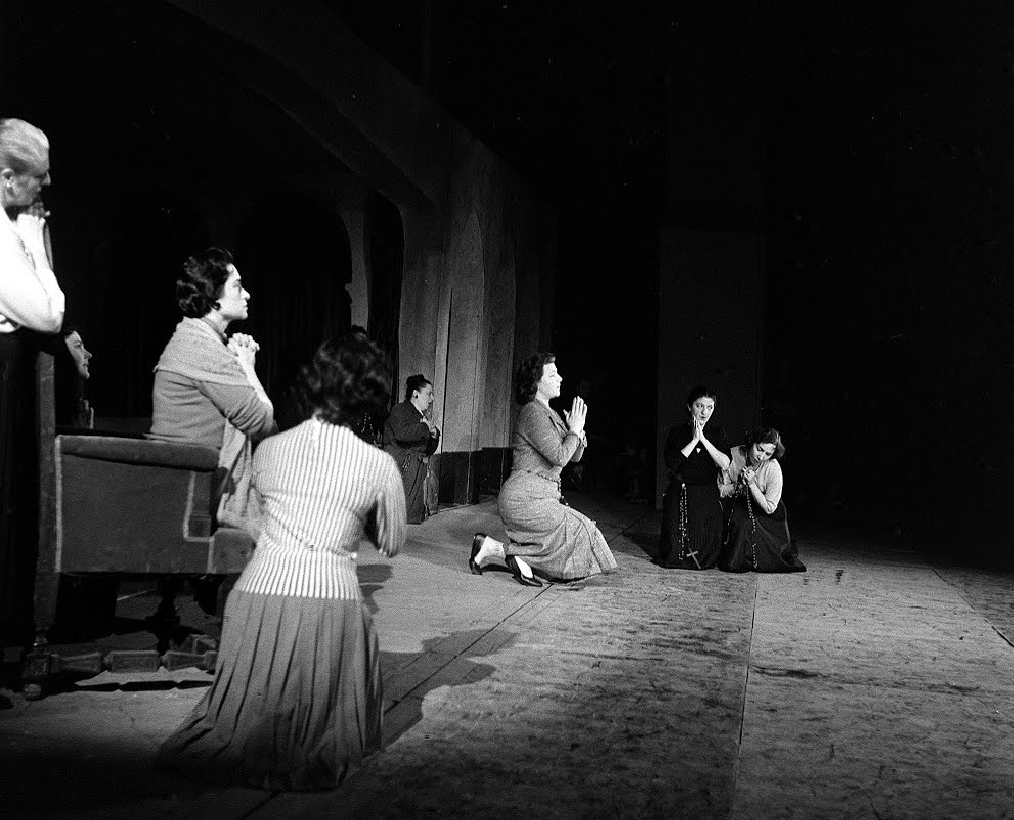
Premièr at Teatro alla Scala, Milan – 26 January 1957
Blanche de la Force, his daughter VIRGINIA ZEANI soprano
Thierry, a footman ARMANDO MANELLI tenor
Mme. De Croissy, the Prioress GIANNA PEDERZINI contralto
Sister Constance of St. Denis, a young novice EUGENIA RATTI soprano
Mother Marie of the Incarnation, assistant prioress GIGLIOLA FRAZZONI mezzo-soprano
M. Javelinot, a doctor CARLO GASPERINI baritone
Mother Jeanne of the Child Jesus VITTORIA PALOMBINI mezzo-soprano
Madame Lidoine, the new prioress LEYLA GENCER soprano [Role debut]
Sister Mathilde FIORENZA COSSOTTO mezzo-soprano
Father Confessor of the Convent ALVINIO MISCIANO tenor
1st Commissary ANTONIO PIRINO tenor
2nd Commissary ARTURO LA PORTA baritone
Officer ALFREDO GIOCOMETTI bass
Gaoler MICHELE CAZZATO bass baritone
Eleven Carmelites sopranos, mezzo-sopranos, contraltos


STAGIONE 1956 – 1957






CONTRACT FOR THE PERFORMANCES

TRESORS DE LA BIBLIOTEQUE NATIONALE


NEW YORK TIMES
%20I%20Dialoghi.png)


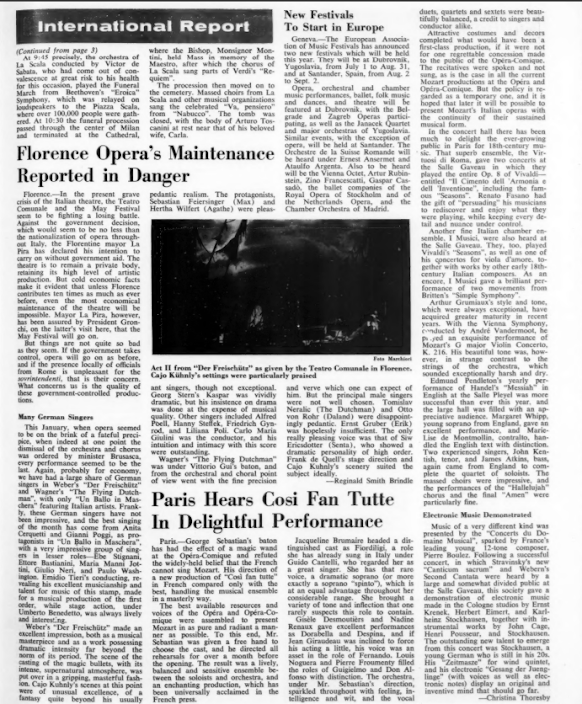


Operanın kabesi sayılan «La Scala», «Merdiven» demektir. Bu tehlikeli «Merdiven»i çıkan ilk Türk sanatkârı olmanın heyecanı
Ah, dedi, bu merdivenler! Sizi kim bilir ne kadar yordu!
Zararı yok, dedim. Yıldızlara tırmanmak kolay mı? Hem sizin çıktığınız merdiven in yanın da bunun sözü mü olur?
Zeki bir tebessümle hemen:
İltifat ediyorsunuz, dedi. Ama doğruyu da söylüyorsunuz. Bakın, o kastettiğiniz merdiveni çıkmak için iğne ipliğe döndüm, bir ayda sekiz on kilo verdim.
Gülüşüyoruz. Ama, şöyle bir dikkatle bakınca, Leylânın gerçekten süzülmüş, bir hayli zayıflamış olduğu fark ediliyor. İnce bir zevkle döşenmiş, kutu gibi salona geçip de konuşmamıza başlarken, bu uzunca mülakata «Merdiven» başlığını mutlaka koymayı kararlaştırıyoruz. Aynı zamanda Scala'ya çıkının bütün hikâyesini anlatmayı...
Nasıl çıktınız bu «merdiveni, anlatır mısınız?
Scalaya çıkışım bu son İtalya seyahatinde gerçekleşti. Fakat, ilk basamaklara adım atışım daha eskidir. İtalya’da evvelce, San Carlo ve diğer operalarda oynadığım zaman, Scala idaresi benimle alâkalanmaya başlamış ve faaliyetimi adım adım takip etmiş. İlk muvaffakıyetlerimden iki yıl sonra, ancak geçen haziran ayında, sesimi dinlemek üzere, beni davet ettiler.
Bu davet, İtalya’da oynadığım birçok operaları idare etmiş olan ve beni çok iyi tanıyan Mo. Tullio Serafin'in kızı vasıtasıyla oldu. Bu iyi dost beni Scala'nın artistik direktörü, meşhur orkestra şefi De Sabata'ya götürdü. Üç çeyrek saat süren çetin bir auditiondan sonra, İtalya opera âleminin en büyük otoritesi sayılan Maestro bur seneki programda yer alacağımı müjdeledi. Bu audition, Scala'ya girişim için ilk ve kat'i merhale oldu. Onun kadar müşkülpesent bir üstadın önünde üç çeyrek saat teganni etmenin ne demek olduğunu bu işten anlayanlar bilirler. De Sabata ile yaptığım bu ilk audition'un neticesi büyük bir muvaffakiyet sayılmak gerekirdi. Çünkü akabinde, hemen angaje edilmiştim. Halbuki Callas gibi bugün dünya ölçüsünde şöhret yapmış değerli bir sanatkâr, De Sabata ile yaptığı ilk audition'da beğenilmemiş, bu yüzden Scala'ya girebilmek için dört sene daha sabretmesi icap etmiştir. Şunu da ilâve etmeliyim ki bu mevsim başında Amerika’da, San Francisco'da, verdiğim temsillerin muvaffakiyet, Scala'nın beni angaje etmek kararını perçinlemiştir.
Böylece Fransız bestekârı Francis Paulenc'in Dialogues des Carmelites isimli eserinde vazife almak üzere 20 Aralık’ta Scala'ya gittim. Daha evvel Napoli’deki San Carlo Operasında, kasım sonlarında, birkaç temsil vermiştim. Scala'ya adım attığım ilk gün umumi kâtip Oldani beni kabul etti ve hazırlanmış olan mukaveleyi imzaladık. Bu mukaveleye göre Dialogues'da yeni baş rahibe Lidoine rolünü dört defa temsil etmeyi çalışmalar dahil iki ay orada kalmayı, bu arada Scala hesabına Puccini'nin Manon Lescaut operasına hazırlanmayı taahhüt ediyordum.
İlk intibalarınızı sorabilir miyim?
Mukaveleyi imzalarken ilk intibalarım şu oldu: Scala mensuplarına umum müdüründen kapıcısına kadar, sanat değerini henüz bilmedikleri herkese karşı bir tepeden bakma, bir hor görme, bir mesafeli muamele ile karışık muazzam bir gurur sinmiştir. Onlarda öyle bir kanaat var ki Scala'nın fevkinde bir sanat mabedi tasavvur edilemez ve bu mabede lalettayin sanatkârlar giremez! Ananeye bağlılıklarını, müşkülpesentliklerinin derecesini bildiğim için, ilk temasta bana da bir müptedi gözüyle bakmış olmalarını tabii buluyordum. Fakat daha ilk adımda henüz çalışmalara bile başlamadan bu intibanın insanı ne kadar sarstığını takdir edersiniz. O gün anladım ki maneviyatını bozmadan, bu fethedilmez görünen kaleyi fethetmek gerçekten büyük bir azim ve irade işidir.
İşte bu ruh hali içinde, sinirlerim tamimiyle gerilmiş olarak ilk çalışmalara başladım. Müzikal çalışmalar, korrepetitörlerle yapıldı ve bitti. Bu safhada ancak partimi ve eseri tanımış, öğrenmiş ve ezberlemiş oluyordum. İlk muvaffakiyetim de baş korrepetitör Tonini gibi değerli ve sözü geçen bir maestronun takdirlerini ve sempatisini kazanmak oldu. Bunu takiben sahne provalarında bütün Scala erkânının, rejisörün ve bestekârın, her gün kademe kademe, takdirlerini kazandığımı hissettim. Bu arada 14 Ocak’ta orkestra refakatinde verdiğim mühim bir konserin herkes üzerinde çok müsbet tesirler bıraktığını öğrendim.
Sahne provaları ilerledikçe heyecanım artıyordu. Çünkü rejisör, bestekârın orkestra şefinin hatta bütün koronun ve diğer rol sahiplerinin gözleri benim üzerimde idi. Bütün bu İtalyan, Viyanalı, Romen, Fransız ve Yunanlı çeşit çeşit milletten, fakat hepsi benden evvel Scala'ya girmiş, orada yer tutmuş sanatkârlar arasında, bu ulu sahneye çıkmak için gelmiş bir yabancı, ilk Türk sanatkârı idim. Beni beğenenler olduğu gibi beğenmeyenler de olabilirdi. En küçük bir falsoda beni bertaraf etmek için her şey yapılabilir, her entrika çevrilebilirdi. Kaldı ki Scala'da, kendisiyle mukavele imzalandığı halde son dakika da tazminat verilerek rolü elinden alınanlar görülmemiş değildi. Meselâ bir sene evvelinden Aida operası için angaje edilmiş olan meşhur Amerikalı Zenci sanatkâr Miss Davy, umumi provada beğenilmemiş ve mukavelesi feshedilerek temsillerden vazgeçilmişti. Bu korkunç hadise ben orada, Dialogues provalarında çalışırken, gözlerimin önünde cereyan etti. Onun için, ilk temsile kadar, her gün aynı feci akıbete uğrayabilirim endişesiyle, âdeta bir uçurumun kenarındaymışım gibi, korku ile, heyecanla, aynı zamanda böyle bir akıbete uğramamak için müthiş bir azim ve imanla çalışıyor, her provamın son derece mükemmel olmasına dikkat ediyordum. (Devamı yarın)

Ankara'dan gelen kuvvet ve cesaret rüzgârı – Oynayacağım eser: Francis Poulenc'in Dialogues des Carmelites'i – Bir dünya premieri nasıl hazırlanır)
Oldu. Önce, sanat çalışmalarımda beni her zaman büyük bir anlayışla teşvik eden kocam, yılbaşında, on gün kadar kalmak üzere beni ziyarete geldi. Bu sayılı günlerini maneviyatımı, azmimi bütün şefkatiyle takviye etmekle geçirdi. O döndükten sonra da Ankara'dan aldığım iki mektupla o sırada çok muhtaç olduğum bir kuvvet ve cesaret rüzgârı oldu. Bunlardan biri sizin mektubunuzdu. Öbürü de hocam Muhsin Ertuğrul'un. Kıymetli bir hâtıra olarak sakladığım bu mektubunda, Muhsin Bey, bakınız neler yazıyor du: «... Biliyorsun, ben yıllarca ön ce sana demiştim ki: «Leyla'cığım, eğer bir gün Scala'da oynamaya muvaffak olursan, ben ne yapar yapar, uçağa atlar, Milano’ya gelirim. Fakat büyük söylemişim veya bunu yapacak kadar sevgili bir kul değilmişim ki, Allah bu aralık benim Ankara'dan ayrılamayacağım bir takım mühim sebepler yarattı. Onun için gelemeyeceğim, fakat ruhen yanı başında olacağım. Hem yalnız ben ve seni sevenler değil, bütün Türk milletinin iyi dilekleri, duaları seninle beraber olacak, senin muvaffak olman bizim için dünya sanat tarihinde bir dönüm noktası olacak, asırlardır bize kapalı olan büyük bir sanat mabedinin ulu kapısı ilk defa olarak bize açılacak, o gece senin yanında olmayı, kulağının dibinde sana bunları fısıldamayı ne kadar isterdim. Ama zararı yok, sen bunları duyacaksın ve hatta beni kulis arasında yaşlı gözlerle seni alkışlarken göreceksin, buna emin ol, o kadar senin yakınındayım ve seninle beraber yaşayacağım O geceyi.
Seni Allaha emanet eder, binlerce defa öperim, sevgili Leylacığım, benim biricik öncüm!»
Hocamdan gelen bu kıymetli sözlerin azmimi, imanımı nasıl kamçıladığını, bana ne kadar kuvvet ve cesaret verdiğini takdir edersiniz.
Oynadığınız eser hakkında biraz bilgi verir misiniz
Dialogues des Carmelites bildiğiniz gibi, Bernanos'un şaheseri sayılan bir sahne eseridir. Scala idaresi bu eserin opera haline getirilmesini Francis Poulenc'e ısmarlamıştı. F. Poulenc, Fransa’da. Honegger'in başında bulunduğu Altılar grubuna dahildir. Ve çağdaş Fransız bestekârları arasında seçkin bir yer tutar. Eserin vakası Fransız ihtilâli sırasında, manastırların yıkılıp dağıtıldığı sıralarda geçiyor. Bir korku dramı olarak vasıflandırabileceğimiz eser, bütün yasaklara, mizaç ve karakter farklarına rağmen, birbirlerinden ayrılamayan beş Carmelite rahibesinin, başlarını giyotine vermek pahasına inançlarına nasıl bağlı kaldıklarını gösteriyor.
İlk temsil nasıl hazırlandı?
Eserin ilk temsili, bir dünya prömiyeri olarak verileceği için, büyük bir itina ile hazırlanmıştı. Hatta ilk hazırlıklara daha geçen Ağustosta, Paris’te, Ricordi'nin Reisi Valcarenghi; Scala'nın Umum Müdürü Gringhelli ve umumi kâtibi Oldani ile bestekâr arasında yapılan bir toplantıdan sonra başlanmış, dekor ve kostümler meşhur Fransız dekoratörü Wakhewitch'e ısmarlanmış, rejinin de yirmi seneden beri Scala’da ve Salzburg’da en güç ve kalabalık eserleri sahneye koymuş olan Viyanalı kadın rejisör Margherite Walman'a tevdi edilmesi kararlaştırılmış. Rejisörle dekoratör, eser hakkında, vakanın geçtiği yerler üzerinde ayrı ayrı uzun tetkikler yapmışlar.
Dialogues'un ilk temsili için bütün Scala seferber edilmişti, diyebilirim. Yani orkestrası, korosu, teknisyenleri, uzmanları ve idarecileriyle beraber 400’den fazla insan bir ay müddetle yalnız bu eserle meşgul olmuştur. Scala gibi her akşam temsil veren bir repertuvar operası için bunun ne demek olduğunu ancak meslekten olanlar takdir edebilirler. Meselâ her repertuvar operası iki üç orkestra provasıyla çıkarılırken bu eser için en az on beş orkestra provası yapıldı. Ayrıca her perde, bazen her sahne ayrı ayrı provaya konuldu." Koro için daha da fazla prova yapılmıştır.
Bundan başka eserin bestekâr bütün provalara iştirak etti. Böylece orkestra ve koro şefleri, rejisör, dekoratör ve bestekâr devamlı bir iş birliği halinde çalıştılar. Elele verip eserin en iyi şekilde gerçekleştirilmesini sağladılar. Sanatkârlar da Scala’nın tecrübe edilmiş sanatkârlarıydı. Bir ay müddetle bütün diğer eserlerin provaları ikinci plâna atıldı ve bütün mekanizma, bütün imkânlar Dialogues için kullanıldı. İlk temsilin kusursuz olmasını teminen maddi, manevi hiçbir fedakârlıktan çekinilmedi. Her şey en ufak teferruatına kadar düşünüldü. Şüphe yok ki bütün bu itinayı, bu kaliteyi ve icap ettirdiği muazzam masrafları (hem de sadece dört temsil için) yalnız Scala temin edebilirdi. Dialogues'un bir Fransız operası olduğu halde, Paris Operasından evvel Scala'da, bir dünya prömiyeri olarak verilmesinin sırrı ve hikmeti buradadır.
Peki ama bunca hazırlık, bunca emek yalnız dört temsil için mi?
Evet. Scala'da gelenek her yeni eseri ilk defa, en çok dört akşam oynamaktır. Pek rağbet görürse birkaç akşam daha oynanır. Dialogues bir defa daha tekrar edildi, yani beş defa oynandı. Daha da tekrarlanacaktı, fakat sanatkârların başka angajmanları var, onun için Milano’dan ayrılmak zorunda idiler.
Bu konuda dikkate değer bir nokta da şudur: Bunca emek, bunca masraf bahasına yeni bir eser yaratılırken, modern eserlerin akıbeti daima meçhul olduğu, hele İtalyan halkı yabancı eserlere karşı daima müsamahasız davrandığı için. Scala kendisini fazla angaje etmiyor. Eserin halktan göreceği alakayı bekliyor. Göze aldığı risk tamimiyle maddidir. Bununla beraber manevi hiçbir şey de esirgenmiyor. Yeni operaların mukadderatı daha çok ilk temsiller bittikten, halkın ve münekkitlerin reaksiyonu belli olduktan sonra taayyün ediyor. O eserin gördüğü alâkaya göre repertuvarda bir yer ayrılıyor.
Dialogues hakkında kanaatim şudur ki önümüzdeki mevsimlerde tekrarlanacak. Scala'da halktan gördüğü iyi kabul üzerine Paris Operasıyla San Francisco Operalarında temsil edilmesi şimdiden kesinleşti. Gelecek mevsimde de Roma'da, Scala kadrosuyla tekrarı düşünülüyor. (Devamı yarın)


Çok tehlikeli bir durumdan kurtuluş – Toscani’nin ölüm haberi – Meslektaşlar arasında kazanılan zafer – Kale içinden fethedilmişti – Umumi prova – İlk rahat uyku
Scala’daki çalışmalarınızda si zi üzen güçlükler, aksilikler oldu mu hiç?
Fakat Dialagues çalışmalarında karşılaştığım en büyük aksilik, hatta en tehlikeli durum ilk orkestra provası günü baş gösterdi. O sabah, kalktığım zaman kendim de umumi bir yorgunluk ve sesimde bir kısıklık fark etmiştim. Ses Tanrı vergisi, çalışma ile gelişen bir kabiliyet belki, ama aynı zamanda çok nazik, çok hassas en küçük bir maddi veya manevi arızadan müteessir olan bir şey. Sinir ve heyecan içinde provanın başlamasını bekledim. Bu benim Scala da orkestra ile ilk provam, yani sahnede ilk imtihanım sayılırdı. Çünkü, ilk orkestra provasında, orkestra şefi, rejisör ve bestekârdan başka Scala’nın Umum Müdürü, Artistik Direktörü ve diğer bütün sanat şefleri ve maestroları mutlaka bulunurlar hem ensemble hakkında hem sanatkârların ferdi imkânları hakkında kati bir kanaat edinmek isterlerdi. İşte bu nazik durumda, sesimin yüzünden partimi istediğim gibi söyleyemez, hakkımda tereddütler uyandırırsam diye korkuyor, korktukça heyecanlanıyor, heyecanlandıkça sesimin büsbütün kısılır gibi olduğunu hissediyordum. Ah, bu orkestra provası bugün değil de yarın olsaydı, biraz dinlenip kendime gelebilseydim! diye düşünüyor ve beni mahcup etmemesini Allahtan yalvarıyordum.
İşte, bu sırada, tam orkestra provası başlamak üzere iken, umulmadık, beklenmedik bir şey oldu: Artistik Direktör Muavini Mo. Bianchi orkestra şefine yaklaşarak kulağına bir şeyler söyledi. Orkestra şefi Mo. Sanzogno'nun yüzü allak bullak oldu. Heyecanla değneğini kaldırarak: «Bayanlar, baylar, dedi. Şimdi aldığımız bir habere göre büyük Toscanini öldü. Prova tatil edilmiştir!»
Allah bana acımış, çok tehlikeli bir durumdan umulmadık bir şekilde kurtulmuştum. Fakat sanat dünyası için elemli bir haber olan bu ölüm benim üzerimde ayrıca derin bir tesir bıraktı. Bana öyle geldi ki, Toscanini'nin ruhu beni korumuştu. O gün orkestra provasını kısık sesle yapmış kim bilir aksiliklerle karşılaşabilirdim. Bir yandan o büyük a- damın öldüğüne üzülüyor, bir yan dan da bu sayede provanın ertesi sabaha kaldığına seviniyordum. Ertesi sabaha kadar nasıl olsa kendi mi tedavi edebilirdim. Fakat ertesi sabaha kadar heyecandan uyumak bile mümkün miydi? Çünkü mukadderatım, her şeye rağmen bu ilk orkestra provasında belli olacaktı.
Ertesi sabah ne oldu?
Ertesi sabah provaya geldik. Prova başlamadan önce Valinin gönderdiği bir mesaj okundu. Sonra büyük bir menekşe buketi Toscanini'nin her zaman orkestrayı idare ettiği şef kürsüsüne konuldu ve bütün orkestra, solistler, koro, sahnede ve salonda bulunan herkes ayağa kalktı, o büyük adamın süren bir hatırasına beş dakika saygı duruşu yaptık. Bütün bu hâdiseler üzerimde öyle derin bir tesir yaratmıştı ki ta içimden gelen bir inanışla Allaha yalvardım. Bana yardım etsin diye... Dün beni tehlikeli bir durumdan kurtarmış olan Toscanini'nin ruhu bugün de bana yardım etsin, partimi kusursuz söyleyeyim, diye...
Çok şükür öyle de oldu. Herkes çok heyecanlı, çok müteessir olduğu için gergin bir hava içinde başlayan orkestra provası yavaş yavaş canlandı. Toscanini'nin ruhu gün bütün orkestraya, bütün solistlere, bütün koroya hâkimdi sanki. Sıram gelince o kadar güzel, o kadar pürüzsüz söyledim ki da- ha dün sabahki o kısık sesten sonra, buna kendim de şaşıyordum. Neticede parlak bir orkestra provası yapmış oldum. Prova bittikten sonra rejisör, bestekâr, orkestra şefi, artistik müdür ve diğer sanatkârlar birer birer gelip beni tebrik ettiler. Sesimin Scala'ya göre, yani büyük bir tiyatroya ve sahneye göre lâzım olan hacmi haiz olduğunu hatta salon büyüdükçe genişleyen bir ses olduğunu söylediler. İşte Scala’da söyleyeceğime ben de yüzde yüz o gün inandım. Bu benim Scalada, meslektaşlar arasında kazandığım ilk zaferdi. Kaleyi içinden fethetmiştim.
Umumi prova ne zaman, nasıl yapıldı?
Umumi prova orkestra ve sahne provaları tamamıyla bittikten sonra yapıldı. İlk orkestra provasından sonra moralim o kadar düzelmişti ki bütün orkestra ve sahne provalarını büyük bir huzur ve rahatlık içinde yaptım. Nihayet umumi prova günü geldi çattı. Scala’da dünya prömiyeri olarak verilen eserlerin umumi provaların da salona kimseyi almıyorlar. Bütün davetliler localarda oturuyolar. Sanatkârlar da seyirci olarak yabancı gazeteciler, münekkitler, İtalya’nın belli başlı bestekârları, orkestra şefleri, radyo ve televiz- (Bir sütun eksik aktarılmıştır)


Anlatayım. Çetin şartlar altında geçen, fakat umumi provada çok iyi bir inkişaf gösteren çalışmalardan sonra ilk temsil gününe gelmiş bulunuyordum. O sırada birçok yerlerden muvaffakıyet temennileri getiren ve beni pek mütehassis eden telgraflar alıyordum. Bunların başında mensup olmakla iftihar ettiğim Devlet Tiyatrosu Ailesi adına Muhsin Bey'in çektiği telgraf vardı. Sonra Amerika'dan, San Francisco Operası'ndan, oradaki Haberler Büromuzun değerli müdürü Nejat Sönmez'den, New York’taki emprezaryom Columbia Artists müessesesinden, Napoli’deki Basın Birliği'nden ve Ankara Kadınlar Birliği ile İstanbul'daki, Türk Kimya Cemiyeti'nden ve saire. Bu telgrafların hepsi de çok emin bir ifade ile ilk temsil için başarı diliyorlardı. Galiba umumi provalarda gösterdiğim muvaffakıyet beni sevenlere, bana güvenenlere malum olmuştu.
İşte bu müsait şartlar altında ilk temsile hazırlanmıştım. Fakat Scala'nın, burada ilk defa söyleyecek sanatkârlar için korkunç bir sahne olduğunu söylerlerdi, pek inanmazdım. Gerçekten öyle imiş. Bunu bizzat tecrübe etmiş bir sanatkâr olarak itiraf etmeliyim. Çünkü sahnenin, salonun ve orkestranın azamet ve haşmeti, dünyanın en eski, en meşhur opera sahnesi olduğu bir yana bırakılsa bile seyircisinin en küçük bir ihmale, bir sürçmeye tahammül edemeyip der hal en şiddetli tepkiyi göstermekten çekinmemesi, ayrıca münekkitlerin zalim denecek kadar müsamahasız olmaları bu sahneye ilk defa çıkacak sanatkârın başını döndürmeğe kâfidir. Bu itibarla Scala'ya ilk defa çıkan bir sanatkâr için ancak şu iki ihtimal mevcuttur. Daha çok parlayıp dünya ölçüsünde bir şöhrete ulaşmak yahut eski şöhreti de kaybedip silinmek. Hamlet'in dediği gibi: «Var olmak yahut olmamak».
Bu ruh hali içinde ilk temsilde rolümü oynamağa ve partimi söylemeğe çıktığım zaman, ilk anda, kalbimin göğsümde değil, boğazımda attığını hissettim. Heyecandan sesim bana sanki hiç çıkmayacakmış gibi geldi. Başım döndü. Fakat aynı ânda bu ulu sahneye çıkan ilk Türk sanatkârı olduğumu, bir saniyelik şaşkınlığımın olacağı muvaffakiyetsizliğin yalnız kendime değil, memleketime de zararı dokunacağını hatırladım ve Hocam Muhsin Ertuğrul'dan o sabah aldığım telgraf gözümün önüne geldi: «Sana bütün Türk milletinin başarı dileklerini, Devlet Tiyatrosu ailesinin candan dualarını bildiriyorum. Sahnede seninle beraber olacağız, seni alkışlayanlar arasında ruhlarımız bulunacak. Onların yaşa seslerini sen duyacaksın». Sonra Büyük Elçimiz Scala'nın misafiri olarak, kendisine tahsis edilen locada yer almış, beni dinlemeye ve muvaffakıyetimi alkışlamaya gelmişti. Bu kadarı beni kendime getirmeye kâfi geldi ve ilk cümlelerimi sükunetle, hatta akıcı bir rahatlıkla söylemeye başladım. Eserdeki belli başlı Carmélite rahibelerinden, yeni başrahibe Lidoine'ı oynuyordum. Üçüncü perdede sahneye hemen hemen ben hâkimdim. Eser modern bir opera olduğu için bildiğimiz tarzda klasik aryaları yoktu, fakat 20 dakika müddetle ben konuşuyordum. Bu sahne eserin en dramatik, aynı zamanda en patetik sahnesiydi. Hapishanede bütün Carmélite rahibelerine ölüme mahkûm edildikleri tebliğ ediliyor, ben de hem onlara bu ilahi takdire sükûnetle boyun eğmeleri gerektiğini telkin ediyor, hem de hükmü tebliğ edenleri, bir kadın olarak, metanet ve cesaretimle şaşırtıyor, hayretler içinde bırakıyordum. Onun için ben de bütün kuvvetimi bu sahneye toplamıştım. Ben uzun uzun konuşurken sahne arkadaşlarımdan diğer rahibe rollerini oynayanların gözlerinden yaşlar akmağa başladığını gördüm. Bir ara gözüm suflöre ilişti. Bir de ne göreyim o da ağlamıyor mu? İşte o zaman sahnede bir şeyler yapabildiğimi, beni seyredenleri ve dinleyenleri duygulandırıp heyecana getirebildiğimi anladım. Rolüm de eser de kurtulmuştu. Çünkü Scala seyircisi birçok modern eserleri, meselâ Menotti'nin dünyanın her yerinde çok beğenilen Konsolos Operasını, beğenmeyip ıslıklamıştır. Dialogues için de böyle bir akıbet, haksız olmakla beraber hatıra gelebilirdi. Tahminimde yanılmamışım. Sahnede konuşmam biter bitmez bütün salondan şiddetli, bir alkış koptu. «Bravo!» sesleri arasında dakikalarsa sürdü. Perdenin kapanmasına daha hayli zaman vardı. Scala’da perde kapanmadan kopan alkışların eser ve sanatkâr için ayrı bir ehemmiyeti vardır. Bu demektir ki kopan alkış bir nezaket ve itiyat eseri değil, içten gelen, spontane bir takdir eseridir. Son perde kapandıktan sonraki alkışlar tezahürat şeklini aldı. Diğer sahne arkadaşlarımla beraber belki 20 defa perdenin önüne çıkıp halkı selâmladık. Tabi orkestra şefi, bestekâr ve rejisör de beraber. Bestekâr ve Scala idarecileri eserin halk tarafından da iyi karşılandığına çok seviniyorlardı. Çünkü aksi halde aylarca sürmüş olan çalışmalar, onca emekler ve bu uğurda sarfedilen milyonlarca liret heba olacaktı. Netice Fransız müziği ve Scala tiyatrosu için büyük bir zafer oldu.
Sizin için de öyle olmadı mı?
Benim için de tabii, hem yalnız benim için değil, memleketimiz için de. Bunu iftiharla söyleyebilirim. Çünkü kazanılan netice bilhassa operamız için çok kıymetlidir. Şimdi bütün dünya da bir Türk Operası olduğunu, oradan milletlerarası seviyede sanatkârlar yetiştiğini biliyor. O kadar ki, Dialogues temsilinden birçok yerlerden önümüzdeki mevsim için mühim teklifler yaptılar. İlk temsilden sonra Milano sosyetesinin en maruf ailelerinden Crespi’lerin konağında verilen 500 kişilik muazzam bir supede milletlerarası sanat ve müzik âlemine mensup birçok şahsiyetler etrafımı aldılar. Memleketimiz, Operamız ve faaliyeti hakkında bana sualler sordular. Onlara Ankara Operamızı anlattım. Pek yakında İstanbul'da da Avrupa ölçüsünde bir operaya sahip olacağımızı söyledim. Scala'nın umum müdürü, şimdiden İstanbul Operasıyla alâkalandı. Scala kadrosuyla İstanbul'a gelip temsiller vermekten zevk duyacağını söyledi. Kanaatimce ne yapıp yapıp İstanbul Operasını bir ân evvel bitirmeli ve açmalıyız. İstanbul Operası bizi milletlerarası sanat ve medeniyet âlemine bağlayan yeni bir köprü vazifesi görecektir.
Gazeteler neler yazdılar?
İtalyan münekkitleri beni beğendiler. Corriere della Sera, II Tempo, La Notte gibi mühim gazetelerin opera münekkitleri benim rolüm üzerinde durarak takdirkâr satırlar yazdılar. Bazı Fransız gazetelerinde de adımdan bahsedildi. Bazılarında da bahsedilmedi. Fakat Fransa için bunu tabii görmek lâzımdır. Çünkü onlar eserde vazife alan sanatkârlardan çok, milli bir hâdise olarak, kendi bestekârlarının Scala sahnesinde bir dünya prömiyeri olarak verilen eseriyle, eserin kazandığı muvaffakıyetle meşguldüler. Kendi umumi efkârlarına da hâdisenin daha çok bu tarafını aksettirdiler. Tıpkı Türk umumi efkârının eserden, İtalyan sanatkârlarından çok benim rolümle, benim muvaffakiyetim veya muvaffakiyetsizliğimle meşgul olması gibi.
Fakat beni en çok mütehassis eden Scala idaresinin ve eserin bestekârı Francis Poulencin takdirleri oldu. Birinci temsilden sonra Umum Müdür Scala'nın devamlı sanatkârları arasında artık yer aldığımı ve yakında başka eserlere çıkmağa hazırlanmamı müjdeledi. Poulenc de bana bir mektupla büyük bir şişe parfüm gönderdi. Mektubunda şunlar yazılıydı: «Milano’dan ayrılmadan evvel Baş rahibeme verdiğiniz çok güzel, beşerî ifade için size tekrar teşekkür ederim. Haftalarca beraber çalıştıktan sonra eserime can veren sanatkârlardan ayrılmak ne zor. Paris'ten geçecek olursanız mutlaka haber verin. Roma temsilleri tahakkuk ederse sizi tekrar sahnede görmek benim için bir saadet olacaktır. Siz olmazsanız, ilahi baş rahibem ne olur?» (Devamı yarın)


Umulmadık bir teklif – De Sabata’nın idaresinde Toscanini’ni için mersiye – Muhteşem bir cenaze merasimi – Duomo katedralinde Verdi’nin Requiem’ini söylerken unutulmaz hatıralar.
Toscanini’nin cenaze merasiminde mersiye söylemişsiniz, bu nasıl oldu?
Partiyi iki günde öğrendim, sonra De Sabata ile de iki gün çalıştım. O büyük şefle, Scala'daki odasında, çalışırken duyduğum zevki, ettiğim istifadeyi, aynı zamanda çektiğim heyecanı tasavvur edemezsiniz.
Verdi’nin Requiem’ini De Sabata’dan evvel iki gün başka korrepetitörle çalışmıştım. Onunla çalışırken her şey değişti. Büyük şefler elinde aynı eserin nasıl başka manalar, ifadeler aldığını hayretle görüyor ve mesut oluyordum. De Sabata bu kısa mersiye için bana öyle şeyler söyledi, öyle fikirler verdi, öyle tefsirler yaptı ki dâhi bir şefin ne olduğunu ve esere neler katabileceğini anladım.
İtalyanlar için milli bir matem sayılan Toscanini'nin cenaze merasiminde, İtalyan sopranoları dururken, bir Müslüman sanatkârın seçilmesi benim için olduğu kadar Milano müzik çevreleri için de büyük bir hadise teşkil etti. De Sabata gibi büyük bir müzik otoritesinin beni seçmesi kariyerim için mühimdi, hatta Dialogues'deki muvaffakiyetimin bir neticesi sayılmak gerekirdi. Böylece, aynı zamanda henüz konservatuvar talebesi iken kurduğum bir hayal de gerçekleşmiş oluyordu. O sırada, bir gün Tullio Serafin'in idare, ettiği Rigoletto filmini görmüş ve böyle dahi şeflerle hiçbir zaman sahnede söyleyemeyeceğimi düşünerek ağlamıştım. Halbuki, üç dört sene sonra San Carlo’da söylerken ilk şefim aynı Tullio Serafin olmuş, beni İtalya’da o lanse etmişti. Şimdi de De Sabata gibi bir otoritenin, kalp rahatsızlığı yüzünden orkestra idare etmeği bırakmış, bundan sonra bir daha belki de hiçbir şey idare etmeyecek bir şefin, idaresinde Toscanini için mersiye söyleyecektim.
Toscanini'nin cenaze merasimi nasıl oldu?
Bildiğiniz gibi Toscanini senelerden beri yaşadığı Amerika’da ölmüştü. Naaşı Amerika’dan uçakla Roma’ya, oradan da trenle Milano ya getirildi. Merasim günü Scala' nın fuayesine muazzam bir katafalk yapıldı ve naaş üzerine konuldu. Tabut İtalyan bayrağına sarıldı, etrafında da Scala orkestrasının dört mensubu nöbet tuttular. Fonda muhtelif sanat müesseselerinden gönderilmiş yirmi beş büyük çelenk vardı.
Scala'nın bütün kapıları sabahın 7,5’uğundan itibaren halka açıldı, 7,5’ten 9,5’a kadar yüz binden fazla insan bir sel halinde tabutun önünden aktı. Bu sel içinde en meşhur simalardan tutun da en mütevazi halk adamlarına kadar her çeşitten, her meslekten insan vardı: Ameleler, ihtiyarlar, kadınlar, kızlar, çocuklar ve harp malûlleri. İki tekerlekli arabasıyla gelmiş olan bir harp malûlü bahçesinde yetiştirdiği çiçeklerden bir demeti kendi eliyle tabutun üzerine koydu. 9,5 da kapılar kapandı. Fuayeye de Scala’nın ve müzik âleminin tanınmış simaları ve resmi şahsiyetler yer aldılar. Scala’nın perdesi açıktı ve orkestra sahnede yer almıştı.
Bu sırada senelerden beri kalp rahatsızlığından mustarip olduğu için orkestrayı idare etmeyen De Sabata'nın, loş sahne ışığının altında, siyah bir gölge gibi kalan profili orkestranın başında belirdi De Sabata büyük meslektaşı Toscanini'nin ruhu için Beethoven'in 3’üncü senfonisini, yani ölüm marşını çaldırdı. Bu bir daha görülmesi mümkün olmayan muhteşem ve hazin bir manzara Scala'nın bütün kapıları ve pencereleri açılmış, bomboş salondan kayıp giden Beethoven'in nağmeleri kapılardan, pencerelerden sokağa, hoparlörler ve mikrofonlarla bütün Milano’ya, bütün İtalya’ya yayılıyor, dışarıda cenazenin geçme sini görmek için kaldırım boylarınca dizilmiş yüzbinlerce insan bu hazin havayı dinliyordu.
Mersiyeyi katedralde nasıl söylediniz?
3’üncü Senfoni Scala'da çalınıp bittikten sonra cenaze alayı başladı. Toscanini'nin naaşı katafalktan indirilerek Duom katedrali ne götürüldü. Soğuk, yağmurlu bir gündü. Cenaze yollardan geçerken hayatımda hiç görmediğim in san, üstü bir sessizlik bütün şehri kaplamıştı. Cenaze önce Toscanini'nin evinin önünden geçirildi, pencerelerinden tabutun üzerine menekşeler atıldı. Sonra katedrale gidildi. Scala'nın korosu tam kadro halinde mihrabın solunda yer almıştı. Dini merasimden sonra koro ile ve De Sabata'nın idaresinde Verdi'nin mersiyesini söyledim. Sanat hayatımda belki iyi ve fena söylediğim olmuştur. Fakat Duomo katedralinde De Sabatanın karşısında o gün ipnotize edilmiş gibiydim. Sesimin rengi bile değişmiş, bambaşka bir şey olmuştu. Öyle sanıyorum ki bir daha hayatımda hiç o günkü gibi söyleyemem. Sanat hayatımın en büyük mükâfatı o gün katedralde Requiem'i bitirince, bu dev adamın yanına gidip kendisine teşekkür ettiğim zaman yanağımı okşayarak: «Bravo» demesi olmuştur. Bütün bunlar hayatımın en unutulmaz hatıraları olarak kalacaktır.
Tekrar İtalya’ya gidiyor musunuz?
Evet birkaç güne kadar tekrar İtalya’ya dönüyorum. Palermo’daki Massimo tiyatrosunda, evvelce tesbit edilmiş bir program gereğince bazı temsiller vereceğim. Bu temsiller 17 Mart’tan 4 Nisan’a kadar sürecek. Nisan içinde Scala'da Puccini'nin hazırlamış olduğum Manon'u 2 defa oynamak ihtimali var. Sonra radyo ve televizyonda birkaç opera temsili vereceğim. Scala'da devamlı temsiller vermem, öyle sanıyorum ki, ancak gelecek mevsim için mümkün olacaktır. Fakat gelecek mevsim başında da Amerika’nın muhtelif 12 şehrinde konserler vermek ve San Francisco opera sezonuna da iştirak etmek mecburiyetindeyim. Şimdi bütün arzum, Nisan sonlarına doğru tekrar Ankara’ya dönüp burada ve İstanbul’da hiç olmazsa ikişer Traviata temsiline iştirak etmektir. Beni her zaman teşvik ve taltif etmiş olan seyircimizi, halkımızı özledim. Onun önünde tekrar ve Türkçe teganni etmek benim için büyük bir zevk olacaktır.
Sizi, günlerden beri, bir hayli yordum. Teşekkür ederim.
Estağfurullah, zahmet edip gel diniz, beni sabırla dinlediniz, zahmetler edip söylediklerimi yazdınız, bütün bunlar için ben size teşekkür ederim. (Son)


Pfaff: I Just wanted to ask you about one more debut at this period, because it's such an Important one, particularly for you. That Is Leontyne Price. How did you first meet Leontyne Price?
Adler: I had heard her on television with Peter Herman Adler, and I'd heard about her, and I sensed that this was an artist with whom I would have every possible contact. I asked her if she wanted to sing the Second Prioress in The Dialogues of the Carmelites, of which I had got the first performance in the United States, and actually outside of Italy.
The world premiere was in Milan. It was at the world premiere, and after the premiere, I went with Virginia Zeani, Leyla Gencer, and Franchot Tone, to a fabulous party at the Palazzo Crespi, publishers of the Milan newspapers. I asked Franchot Tone, "How do you think the American public would react to The Dialogues of the Carmelites?" He said, Fabulously. Why? Do you want to give it?" H I said, "Yes, I do." He said, "When?" I said, "Twenty-sixth of September"--! don't know if the date is correct, but let's assume twenty- sixth of September. He said, "I'll be there." I said, "Wonderful. First two tickets sold." [Laughs] He came, actually, with a party, I think, of eight or ten. He came to the premiere.
 |
| Palazzo Crespi |
 |
| Gencer with Kurt Herbert Adler in San Francisco Photo:© Bill Cogan |


Muti tra le Carmelitane Tragedia di sangue e fede
Milano - E' un' opera impegnativa e inconsueta, con una
storia densa e discussa, quella che debutta stasera alla Scala, teatro in cui
nacque nel 1957: i Dialogues de Carmélites di Francis Poulenc (regia di Robert
Carsen, con Leontina Vaduva, Denyce Graves, Elizabeth Norberg-Schulz, Maria Pia
Ionata, Felicity Palmer). Opera mistica e razionale. Opera di sangue, santità,
fede, martirio. Opera femminile, di sottigliezze psicologiche e tensioni. Opera
di voci: recitativi, canti monodici, splendide parti corali. Opera
"singolare e complessa", sostiene con infiammato entusiasmo Riccardo
Muti, che l' affronta dal podio. "Meditazione profonda e sfaccettata sulla
morte, è strutturalmente costruita come una tragedia classica, come un' opera
di Gluck. Si sviluppa lungo dialoghi sul motivo dell' anima umana al cospetto
del destino estremo, con forza ideologica, tensione drammatica e il sentimento
di confessioni intime degli autori diversi che sono alle origini dell'
opera". Può ricostruirle, queste origini? "Il primo spunto è il
racconto L' ultima al patibolo, della tedesca Gertrud von le Fort, pubblicato
nel 1931 e ispirato a un fatto accaduto nella Francia giacobina di fine
Settecento: l' eccidio di un gruppo di religiose del Carmelo di Compiègne,
condannate alla ghigliottina pochi giorni prima della fine del Terrore
rivoluzionario. La paura domina il racconto, riflettendosi in particolare nel
personaggio di Blanche, entrata nel Carmelo per sfuggire a quel timore del
mondo e della morte da cui è minata (fino alla risoluzione conclusiva: Blanche
si riscatterà salendo di propria volontà al patibolo, rapita in un' estasi
mistica). In lei la scrittrice espresse se stessa, e nel medesimo ruolo si
specchiò Bernanos coi Dialoghi nati in vista di un film, che dal racconto del '
31 doveva essere tratto e non fu realizzato. Scritti negli ultimi mesi della
vita di Bernanos come lirica confessione di un credente vicino alla morte,
furono poi messi in scena in forma teatrale. Poulenc, che usò il testo del
dramma sfoltendolo, ma senza alterazioni né mediazioni di un librettista, creò
la musica nel periodo della morte di un amico carissimo. Insomma, ciascuno
degli autori fu portato a identificazioni personali e a riflessioni sulla
morte". Come definirebbe, nella prospettiva del ' 900, l' identità
musicale dei Dialogues? "Poulenc vi appose una dedica emblematica a
quattro musicisti: Monteverdi, Verdi, Debussy e Musorgskij. Il primo per la
recitazione cantata che s' ispira al recitarcantando monteverdiano. Il secondo
per l' uso delle voci: per Madame Lidoine, che nell' opera ha la parte più
cantabile, Poulenc pensava alla Tebaldi, poi toccò a Leyla Gencer. E per il
ruolo mezzosopranile ascoltò molto Amneris in Aida e Azucena nel Trovatore.
Debussy è il riferimento del mondo poetico francese a cui Poulenc attinge,
mentre a Musorgskij si rifà il clima tenebroso, conventuale, di spiritualità
compressa dei Dialogues. Atmosfera che arriva da Boris Godunov e da Kovàncina
nella scelta di certi timbri orchestrali e nell' uso frequente delle campane.
Altre influenze sono lo Stravinskij dell' Oedipus Rex, Berg, Prokofiev, Bartok.
Non citazioni, ma influssi filtrati in un mondo raffinato e personale. E' un'
opera dove la parola s' innalza nel suono e vi si esprime con pienezza. La
musica vive in funzione della parola: informa ogni parola e insieme creano un
assoluto. Le armonie sono moderne, ma la melodiosità del canto lo rende sempre
leggibilissimo all' ascolto". Quali sono i momenti musicalmente più
interessanti? "Molti. In particolare è straordinario il finale del Salve
Regina, culmine genialmente risolto, con colpi di ghigliottina scritti in
partitura e irregolari, che imprimono ulteriore efficacia al canto, regolare
come può esserlo una salmodia o un canto liturgico". S' è detto spesso che
è un' opera ardua. E' d' accordo? "E' un capolavoro, uno dei massimi del '
900 musicale. Certo, non è un' opera d' azione, anche se ha momenti di grande
intensità teatrale. Ma è un' opera profondamente necessaria. Densa di concetti
di carattere teologico, sociale, politico, religioso, esige un pubblico
informato, consapevole, ed è fondamentale la lettura del testo prima dell'
ascolto. La Scala ha fatto un gran lavoro preparatorio in tal senso, con varie
iniziative di approfondimento. Oggi più che mai, in un mondo in cui il dialogo
ha ceduto il posto alla violenza della parola urlata o imposta, è importante
riproporre questi Dialogues magnifici, ricchi di senso razionalmente
organizzato e di possibili percorsi concettuali".

 |
| Dialogues des Carmélites de Poulenc Photo © Erio Picagliani |

«L’Espresso», 3 febbraio 1957
Carmelitane in due dimensioni
Nello schieramento artistico del primo dopoguerra,
Poulenc apparteneva alle forze della così detta musica moderna. Nulla di strano
per un musicista che era fra gli elementi più in vista del Gruppo dei Sei,
tenuto a battesimo da Jean Cocteau e mirante a spingere la musica francese
sulla via dell'antiromanticismo, segnata da Debussy e da Ravel. Ma lo strano è
che quella posizione Poulenc l'occupava praticando un linguaggio musicale tutto
nutrito di ricordi ottocenteschi. A differenza di Milhaud e di Honegger, egli
non sentiva il dovere di farsi un linguaggio originale: quel dovere che, coi
termini moralistici oggi in uso, vien definito come quello d'una presa di
coscienza dei problemi della musica contemporanea.


Per il testo di Bernanos, intessuto di sottigliezze
psicologiche (e qualche volta soltanto verbali), queste due risorse d'una
melodia pudica e d'un accompagnamento tradizionale sono davvero un po' poco. Il
compositore le adopera con raffinatezza squisita, e alcuni dei 16 episodi
musicali che compongono l'opera presentano quelle grazie di oreficeria, quel
miniaturismo che è del migliore Poulenc: particolarmente nel grosso nucleo
omogeneo che sta a cavallo del primo e del second'atto (malattia e morte della
Superiora, veglia funebre, legame affettivo che si forma tra l'orgogliosa e
complicata Suor Bianca e la semplice Costanza). Qui la musica coglie davvero
ciò che nel soggetto più corrispondeva alle doti naturali dell'arte di Poulenc:
il vario profumo di femminilità che vapora sotto l'umiltà monacale. Ma la
musica si arresta gelata e gira al largo di fronte a giansenistiche
sottigliezze verbali come: «Che giova ad una religiosa essere staccata da
tutto, quando non si è distaccata da se stessa, cioè dal suo proprio
distacco?».
Una volta esaurita la fertilità di due motivi conduttori che sembrano adombrare i due aspetti dell'ordine carmelitano, umiltà e coraggio cavalleresco, la monotonia degli accompagnamenti e il fastidio del perenne ritmo binario fanno presto a prevalere sulla generica melodiosità della declamazione. D'accordo, è la natura del soggetto che richiede questo tipo di musica a mezze tinte: soggetto così particolare («Figliola», dice la Superiora a Suor Bianca, «la buona gente si domanda a che cosa serviamo, e in fondo non ha poi tutti i torti... Solo la preghiera giustifica la nostra esistenza, e chi non crede alla preghiera non può considerarci che delle impostore e dei parassiti»). Tuttavia è lecito ricordare che Erik Satie, musicando lunghi passi di Dialoghi platonici, aveva realizzato una musica di questo tipo, certo, ma più capace di serrare da presso il noeciolo ideale di quel pensiero. Qui abbiamo una diligente illustrazione analitica dei fatti e dell'ambiente (più che dei caratteri): ma la paura, che è il vero argomento in questa storia di monache militanti, nella musica non c'è.
THE NEW GROVE BOOK OF OPERA

Dialogues des
Carmélites (Dialogues of the Carmelites)
Opera in three acts by Francis Poulenc to his own libretto after Georges Bernanos' play; Milan, Teatro alla Scala, 26 January 1957.
The cast at
the première included Virginia Zeani (Blanche), Leyla Gencer (the new
Prioress), Eugenia Ratti (Constance) and Fiorenza Cossotto (in the small part
of Mathilde), the conductor was Nino Sanzogno. At the Paris premier the singers
were Denise Duval (Blanche), Régine Crespin (the new Prioress), Rita Gorr
(Mother Marie) and Liliane Berton (Constance); Pierre Dervaux was the
conductor.
Officials of
the municipality, officers, police, prisoners, guards
Setting Chiefly the Carmelite convent at Compiègne, later Paris during the French Revolution and subsequent Terror, 1789-94
The story of
the Compiègne Carmelites was first told by one of their number, Mother Marie of
the Incarnation of God, who survived the Terror and lived until 1836. The
publication of her Relation led to the beatification of the nuns in 1906. In
1931 their story was turned into a novel by the German Catholic convert
Gertrude von Le Fort, the heroine Blanche was her invention. In 1947 the
Austrian priest and French resistance fighter Father Brückberger devised a
cinematic scenario on the subject and engaged the French novelist Georges
Bernanos to write the dialogue. Just as Gertrude von Le Fort had written
herself into her heroine (she named her 'de la Force"), so Beranos, then
suffering from terminal cancer, concentrated on the crisis of faith of the
dying Prioress (even giving her his precise age, 59) as well as exploring his
own religious obsessions. His work was deemed uncinematic, but it eventually
surfaced as a stage play, in which form Poulenc saw it in the early 1950s. When
the Ricordi publishing house suggested it as an opera Poulenc seized the chance
enthusiastically; but despite rapid composition (1953-6) the première was
postponed because of legal wrangles over the rights to the piece.
Act I. The
library of the Marquis de la Force. The opera opens in a mood of
anxiety. The Chevalier de la Force voices his fears for his sister Blanche,
whom he knows to be nervous and easily frightened, for her carriage has been
held up by a protesting crowd. In a breathless Allegro, the Chevalier's father,
the Marquis, recalls the Royal Fireworks Panic he and his wife were caught up
in 19 years earlier, when his wife died giving birth to Blanche. Blanche
appears, seemingly composed: only the shifting unrelated harmonies of her music
betray her inner uncertainty. On her way to bed, she is terrified by a shadow
on the wall; she returns and with a mixture of resignation and resolution
expresses her resolve to take the veil and join the Carmelite order.
KOBBE'S COMPLETE OPERA BOOK
Opera in three acts, libretto by Emmet Lavery from the drama by Georges Bermanos, itself inspired by a novel of Gertrude von Le Fort and a scenario of Rev. Fr. Bruckberger and Philippe Agostini. Première la Scala. Milan. 26 January 1957, with Virginia Zeani, Leyla Gencer, Gigliola Framoni. Eugenia Ratti. Gianna Pederzini, conductor Nino Sanzogno. First performed at Paris Opéra. 1957, with Denise Duval. Régine Crespin, Rita Gorr. Liliane Berton. Denise Scharley, conductor André Cluytens: Cologne. 1957: San Francisco, 1957, with Dorothy Kirsten. Leontyne Price, Blanche Thebom. Sylvia Stahlman. Claramae Turner, conductor Leinsdorf: London. Covent Garden, 1958, in English with Elsie Morison, Joan Sutherland. Sylvia Fisher. Jeanette Sinclair. Jean Watson, conductor Kubelik: Vienna. 1959, with Seefried. Zadek. Goltz Rothenberger. Höngen, conductor Hollreiser: Metropolitan. 1977. in English with Maria Ewing, Shirley Verrett. Mignon Dunn, Betsy Norden, Régine Crespin, producer John Dexter.
Scala asked Poulenc for a new ballet score but were told the composer was thinking of writing an opera, whose première they immediately secured. Even though the genesis of Bernanos's Dialogues des Carmélites is a story by a German writer and an idea for a film scenario by two Frenchmen (it was only the dialogue for this film that Bernanos was asked to supply). 'The psychology of fear which is the main theme of the Dialogues is treated in a way entirely characteristic of Bernanos: and the same is true of the interpretation offered in this play of the Communion of the Saints: "One does not die alone:
one dies for others and even in the place of
others"." It is the great merit of Poulenc's setting of Bernanos's
Dialogues that he preserves all the essential character of the original, that
all the words are clearly audible, and that the result is compelling drama.
Act I, scene i.
The library in the Paris house of the Marquis de la Force. April 1789. The
Marquis is resting, but the Chevalier bursts in: rumour has it there is a mob
about, and his sister Blanche is out late In the carriage. The Marquis loses
his calm as he remembers a ghastly incident of nearly twenty years before when
his pregnant wife was jolted in her carriage by a mob and died in giving birth
to Blanche. The Chevalier is particularly worried because of Blanche's
impressionable, not to say morbid, nature. but when she comes in it is to say
that the long and exhausting service that morning has tired her and she will go
to bed. A moment later her scream is heard from the passage-she has
unexpectedly caught sight of a lamp carried by a servant. It is more than a
momentary fear that the shock releases in Blanche. and she formally and with no
sign of panic asks her father's permission to join a Carmelite convent: how
else is someone as nervous as she to find salvation?
Scene ii. The parlour of the Carmelite convent at
Compiègne. The aged Prioress on one side of a screen interviews Blanche who
sits on the other. When Blanche professes to be attracted even by the
privations of the Order, the Prioress emphasises that prayer is the sole reason
for the Carmelites' existence. Under her questioning Blanche breaks down in
tears, but the Prioress softens towards her and asks her whether she has
already chosen her religious name in case she is admitted to the Order: Blanche
answers 'Soeur Blanche de l'Agonie du Christ'.
Scene iii. Blanche and Constance are busy with
household work. Constance prattles away about her country upbringing, until
Blanche snubs her levity with the reminder that the Prioress is lying near them
gravely ill. Constance tries to get Blanche to join her in offering their lives
to God in place of that of the old Prioress, but Blanche rejects the idea in an
agony of fear. Constance tells her of a dream she has had that she and Blanche
will die together.
Scene iv. The cell of the Prioress. The Prioress on
her
Francis Pond by Henri Hell (1959)
We are told that, as a matter of history, the
inhibited and intense Mother Marie was a legitimate daughter of the King and
that the choice of deathbed is obsessed with fear of death, and the Assistant
Prioress, Mother Marie of the Incarnation. tries to give her strength. The
Prioress entrusts to Mother Marie the care of Blanche, who comes in to say
goodbye and is admonished to preserve her innocence of character through trust
in God. Mother Marie begs her to concern herself only with God, but the Mother
Superior reacts violently: "Who am I, wretched as I am at this moment, to
concern myself with Him? Let Him first concern Himself with me! Nothing Mother
Marie can do will restrain the flood of words that pours from her, and she
sends a message that the sisters cannot be allowed to see the Prioress. Blanche
returns, the Prioress tries to speak to her but falls dead.
Act II, scene i.
The chapel of the convent. The body of the old Prioress lies in state. Blanche
by herself makes a half-hearted attempt to pray and then rushes towards the
door, where she is met by Mother Marie who leads her towards her cell; let her
not talk about her failure-tomorrow it will fill her with sorrow, at present it
can only cause her shame.
Blanche and Constance are taking flowers to the grave
of the old Prioress. Constance wonders at the difficulty the old nun had found
in dying one would have said she had been given the wrong death by mistake, as
if it had been someone else's coat in a cloakroom. Perhaps someone when it
comes to their turn to die will find a better death than they deserve.
Scene ii. The hall of the chapter house. It is not
Mother Marie who is chosen Prioress but a certain Madame Lidoine. from outside.
She speaks to the nuns in an aria, praising the old Prioress and bidding them
at all times to remember their duty, which is to pray. Anything that may lure
them from their duty, even the joy of martyrdom, is to be shunned. She leaves
Mother Marie to finish the address, after which in a beautiful ensemble the
nuns offer up an "Ave Maria'.
The bell at the side door rings. It is the Chevalier
de la Force asking to see his sister before he goes abroad.
Scene iii. The parlour of the convent. With a screen
between them and with Mother Marie in the background. the Chevalier accuses
Blanche of staying in the convent because of her fear of fear: Blanche forbids
him to leave on a note of anger and Madame Lidoine daughter of a local
tradesman, may have been considered advisable as to the spirit of the time misunderstanding.
It is an impressively tense scene and reveals in music much of the change that
has come over Blanche since she joined the Order.
Scene iv. The sacristy of the convent. The Father
Confessor has just finished saying what he tells the nuns is his last Mass. The
priesthood has been proscribed, and he must go into hiding. When Constance asks
rhetorically if there are no men left in France, the Prioress says, 'When there
are not priests enough, there will be plenty of martyrs. Mother Marie seizes on
her words: it is the duty of the daughters of Carmel to give their lives so
that France may once again have priests. The Mother Superior firmly corrects
her: it is not for them to decide if their names shall one day be inscribed
among the martyrs.
The bell rings again violently, and a mob pours in.
Two commissars announce the expulsion of the nuns from the convent. Mother
Marie, now in charge, gets into an argument with the first Commissar, who takes
her aside and reveals he was once a sacristan and is at heart a true servant of
the Church. He leads the mob out.
Act III, scene i.
The ruined chapel of the convent. As the Prioress is away. Mother Marie
addresses the assembled nuns. She proposes that together they take a vow of
martyrdom to save the order from harm. But she says firmly, if the vote is not
unanimous, the proposal shall be abandoned. Mother Marie announces that there
is one voice against. Immediately Constance, to save Blanche from
embarrassment, says that that vote was hers; she will retract, and thus they
will be unanimous. Blanche and Constance as the youngest go first to take the
vow. No sooner has Blanche passed the Father Confessor than she takes advantage
of the general confusion to escape.
Outside the convent, an Officer congratulates the
nuns, who leave in civilian costume, on their discipline and public spirit, but
advises them that they will be watched. The Prioress wants to warn the Father
Confessor against coming to celebrate Mass. Mother Marie reacts with
smouldering violence: how can they reconcile this caution with their vow? The
Prioress says that each is responsible before God as an individual, but she
herself must answer for them all and she is old enough to know how to keep her
accounts.
Scene ii. The ruined library in the Paris house of the
Marquis de la Force. Blanche in peasant costume is cooking when Mother Marie
arrives to tell her that
she has come to fetch her. Blanche prevaricates and
tells Mother Marie that her father was guillotined and she is now alone. Mother
Marie gives her an address, where she will be safe and where she (Mother Marie)
will wait for her until the following night. Blanche says that she cannot go,
but Mother Marie is quietly confident.
In a street near the Bastille, Blanche hears that they
have arrested all the members of the convent.
Scene iii. The prison of the Conciergerie. The
Prioress tries to comfort the nuns at the end of their first night in prison;
from now on, she will consider herself bound by their vow of martyrdom, though
it was made in her absence. Constance is convinced that Blanche will return,
because of a dream she has had. The Jailer announces the findings of the
tribunal; it is death for each one of them.
Mother Marie hears of the death sentence from the
Father Confessor. She must die with them, she says, but the Father Confessor
suggests that this may not be the will of God.
Scene iv. The scaffold is prepared and the crowd
watches as the Prioress leads in her little band of fourteen Carmelite
followers. Singing the 'Salve Regina', one after another they mount the
scaffold, and each time the guillotine drops there is one voice the fewer to
sustain the singing. When Sister Constance is alone, she sees Blanche in the
crowd. stops for an instant, then goes with renewed confidence to her death.
Blanche takes up the chant, and with a new serenity follows her sisters to
accomplish the vow they swore together.
Broadcast:
Dialogues des Carmélites > Opera News > The Met Opera ...
Dialogue
on Carmélites I: The Nun's Story > Opera News > The Met ...
Opera
News - Diva by Definition
Recording Excerpts [1957.02.10]
AN INTERVIEW WITH VIRGINIA ZEANI
