
LA FORZA DEL DESTINO

Libretto: Francesco Maria Piave after a Spanish drama by Duke of Rivas Don Alvaro o La Fuerza de Sino
Premièr at Bolshoi Kamenny, St. Petersburg – 10 November 1862


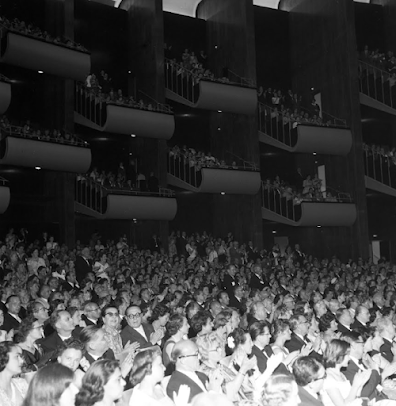

AN EVENING IN COLOGNE
Following article is from Franca Cella’s book The Story of a Primadonna (Bolis Edizioni, 2018, p.146)
They obtained a triumph. Leyla was acclaimed on the stage between those two Almighty Gods' of opera, Di Stefano and Siepi. Drowned in the lights, she looked towards the applause with her face drawn by emotion, still unaware and without the ritual knowledge of a primadonna. A moment later, in her dressing room, without the long hair needed for the scene, her short bob above the habit and her eyes still widened by the dramatic passions, she was endearing. Ghiringhelli made his way through the twenty curtain calls and the triumphant reception with a victorious but slightly worried air (Who is going to tell Maria about this tomorrow?). The chorus and orchestra, who acknowledged it was a great evening, already loved her. 'You won't have an easy life with these critics at La Scala,' was maestro Bianchi's prophecy two days later, holding two German newspapers which praised La Scala and its artists: 'It is the highest level of consecration, they will not easily forgive you.' Leyla smiled about the older people's pessimism; she still believed that the praise and smiles of the theatrical world were sincere-and even worse, promising. It was difficult for her to grasp the depth of a sort of diplomatic rhetoric, so distant from her direct temperament, and she would take refuge-over the years-in the intolerance of tributes and compliments, and in an excessive diffidence.


TABLET

Recording Excerpts [1957.07.05]
FROM CD BOOKLET
The La Scala guest performance in Cologne boasted some of the most luminous stars around.
Leyla Gencer's career - and versatility - is in fact something to marvel at. Born in 1924 in Ankara of Turkish/Polish parents, she studied with Elvira de Hidalgo, making her debut in 1950 in Ankara as Santuzza. Subsequently she continued her studies with the legendary Giannina Arangi-Lombardi as well as Apollo Granforte. She made her Italian debut in 1954 at the San Carlo in Naples as Madame Butterfly. That same season she also sang Tatjana in "Eugene Onegin". Her rise to fame, if not stardom, was fast. She sang Tosca in Lausanne and Munich, Violetta in Palermo, Vienna, Triest and La Scala. That's all very well...but what about the versatility? Well...soon followed Charlotte in "Werther", Agathe in "Freischütz" (with Renata Scotto as Ännchen), Zandonai's "Francesca da Rimini", Blanche in the world premiere of Poulenc's "Les Dialogues des Carmélites", Marguerita and Elena in Boito's "Mefistofele", Renata in Prokoviev's "Fiery Angel", Lisa in "Pique Dame", "Figaro" Countess in Glyndebourne, not to mention central - and not so central roles in the Verdi, Donizetti and Bellini repertoire. Asked about her greatest success' she replied with inimitable poise and grandezza: 'The enthusiasm of the public was such that I only had great successes."
Giuseppe di Stefano was born in Sicily (near Catania) on July 24, 1921. When he was six years old his family moved to Milan where he sang in the church choir. He eventually started vocal studies with Luigi Montesanto. During WWII he served in the army but - tenors being a rare breed he was not involved in any active combat. After the Italian capitulation he fled to Switzerland to avoid imprisonment by the Nazis. There he started giving concerts and radio recitals. He sang Nemorino in a broadcast performance for Radio Lausanne in 1943. In 1944 he made his first recordings of Italian songs for Swiss HMV and subsequently recorded a series of operatic arias with piano accompaniment in the studios of Radio Lausanne. After the war he returned to Milan and continued his studies. He made his official stage debut on April 20, 1946, as Des Grieux in Massenet's "Manon" at the Teatro Comunale, Reggio Emilia. He made his Metropolitan debut as Duca in "Rigoletto" on February 25, 1948. He appeared at the Met regularly from 1948 to 1952. Apart from Faust his repertoire there included Rinuccio, Fenton, Rodolfo, Almaviva and Pinkerton. In 1955 he began to extend his repertoire to include spinto roles like Canio, Don José, Turridu and Andrea Chenier.
At the age of 14 Cesare Siepi joined a madrigal ensemble which specialised in Palestrina and Monteverdi. The four years he sang with this ensemble were a superb preparation for his future career. Siepi later stated that it taught him musical discipline - especially also the necessity to listen to other singers. He retained his love for Monteverdi throughout his career and in recitals he liked to include Seneca's scene from "L'Incoronazione di Poppea". Siepi made his stage debut in 1941 in Schio as Sparafucile, but the war prevented further stage appearances. In 1943 he escaped to Switzerland. In 1945 he resumed his vocal career and caused a sensation as Zaccaria in "Nabucco" and Silva in "Ernani" at the Teatro Fenice, Venice. Subsequently he joined the ensemble of La Scala, making his debut as Zaccaria opposite Gino Bechi as Nabucco, conducted by Tulio Serafin. His career really took wing in 1948 when Arturo Toscanini engaged him to sing Mefistofele and Simon Mago (Nerone) to commemorate the 30th anniversary of Arrigo Boito's death. In 1962 Siepi appeared on Broadway in a musical called "Bravo Giovanni". He played and Italian trattoria owner who manages to hold his own against a fast-food chain. This excursion into a lighter genre was not especially successful, despite superb reviews for Siepi himself. It is the real ed Giovanni-Mozart's - that many opera lovers will forever associate with Cesare Siepi. During the 1950s and 60s half of all his annual performances were as Don Giovanni. Herbert Graf's Salzburg Festival production in the Felsenreitschule starring Siepi, Grümmer, della Casa and Dermota conducted by Furtwängler was filmed in 1953.
LA FORZA DEL DESTINO
Opera in quattro atti e sette quadri di Francesco Maria Piave
Musica di Giuseppe Verdi
Personaggi
Il Marchese di Calatrava Basso
Donna Leonora, sua figlia Soprano
Don Carlo di Vargas, suo fratello Baritono
Don Alvaro Tenore
Preziosilla, giovane zingara Mezzosoprano
Padre Guardiano, Francescano Basso
Fra Melitone, Francescano Basso comico
Curra, cameriera di Leonora Mezzosoprano
Un Alcade Basso
Mastro Trabuco Tenore
Un Chirurgo, militare spagnolo Basso
Coristi: Mulattieri, Paesani spagnoli e italiani, Soldati spagnoli e italiani d'ogni arma, Ordinanze relative, Reclute italiane, Frati Francescani, Poveri questuanti. Coriste: Paesane e Vivandiere spagnole e italiane, Povere questuanti.
Ballo: Paesani, Paesane e Vivandiere spagnole e ita- liane, Soldati spagnoli ed italiani. Comparse: Oste, Ostessa, Servi d'osteria, Mulattieri, Soldati italiani e spagnoli d'ogni arma, Tamburini, Trombe, Paesani, Paesane e fanciulli delle due nazioni, Saltimbanco, Venditori di ogni specie.
Scena: Spagna e Italia.
Epoca: Verso la metà del secolo XVIII.
LA FORZA DEL DESTINO
Colonia, luglio 1957. Il Teatro alla Scala in tournée con i suoi complessi e il fior dei suoi artisti, festeggia la riapertura del Teatro Bühnen der Stadt. Porta due opere: "La Sonnambula", con Maria Callas, nel bianco spettacolo di Luchino Visconti - Piero Tosi, e "La Forza del Destino" con Leyla Gencer, Giuseppe Di Stefano, Cesare Siepi: direttore d'entrambe Antonino Votto.
Chi era Leyla Gencer alla Scala nel '57? Aveva debuttato alla Scala solo l'anno prima nei "Dialoghi delle Carmelitane" di Poulenc, ma De Sabata l'aveva scelta per cantare in Duomo ai funerali di Toscanini (18 febbraio '57); in maggio registra per la Rai quel "Trovatore" televisivo divenuto storico; a giugno canta a Vienna "La Traviata" con Karajan; a luglio debutta "La Forza del Destino" con la Scala, a Colonia. Fu un successo trionfale, con venti chiamate; il 5 (poi il 7) luglio '57.
L'esecuzione ha la cifra Scala di quegli anni: un direttore esperto d'opera, Antonino Votto, che tutto squaderna della romanzesca tragedia verdiana, lancia i suoi cantanti tra terra e cielo e riequilibria l'opera in una oggettività che è sua etica e segno stilistico. Un tenore scaligero, Giuseppe Di Stefano, di voce solare perfin nella malinconia, che entra con l'argento vivo sull'immediatezza delle situazioni, il canto generoso e, seduttore, aperto come l'anima del suo personaggio, l'accento spavaldo. Un basso di aristocratiche altezze, Cesare Siepi: Don Giovanni indimenticabile o Padre Guardiano dal legato immenso, potente fino ad abbracciare e innalzare in preghiere quella squassata umanità, paterno nella comprensione. Un baritono, Aldo Protti, di pasta vocale e umanità verdiana. Un mezzosoprano, Gabriella Carturan, vivace, di vigore scuro; un Melitone di nitido disegno, Enrico Campi. La giovane protagonista sfodera la vocazione alle alte temperature verdiane, e le raggiunge per una via segreta, personale, calamitante.
Disegna un personaggio liricissimo e fiero, ardito e sospeso, col vero genio innocente della malasorte. La voce è lirica, bruna, morbida d'armonici e di colori. Aggredisce il fraseggio con musicalità naturale e decisa, lo rifinisce con cesellature a fil di poesia. Coglie il segreto del personaggio nel rapporto fulmineo tra tuffo d'emozione e "gesto" musicale. Immedesimarsi e reagire, a battito inarrestabile, diventa il segno della sua Leonora di Vergas. È infatti personaggio incalzato da contraddizioni, presagi, da quanto di tragedia il gran teatro del mondo può adunare, grandiosamente spinto a misurare gli spazi oltre all'umano. Già al primo atto il personaggio si scioglie dalla convenzionalità romantica delle interpretazioni tradizionali, e si fa eccitante. Non malinconica fanciulla, ma eroina stimolata a reazioni estreme, muove la frase finale del recitativo d'ingresso in un arco d'angoscia che ripiomba greve di destino, e svela il senso drammatico del pianissimo sul "sol" ("Ahi troppo!... troppo sventurata sono!"). L'aria, che può suonar lamentosa con quel tetro avvio ("Me pellegrina ed orfana"), diventa confessione appassionata di sè, col "crescendo" e "accellerando" in ritmo puntato ("Colmo di tristi immagini"). Il contemplarsi spreme angoscia: nasce "col massimo dolore" la frase lirica d'addio ("Ti lascio, ohimè, con lagrime,/ dolce mia terra! Addio"): il gesto del lasciare indugiato, il fiato sulle virgole a sincopare appena l'emozione, la scansione nitida delle lagrime, la flessibilità sul "terra! Addio." Entra Pippo Di Stefano dal verone, col tema incantatore di Alvaro, il canto inconfondibilmente luminoso, elettrizzante. Oltre i turbamenti, le titubanze da libretto, si crea subito la concordanza travolgente di due grandi cantanti, sulla stessa lunghezza d'onda. Quando l'impulsività scoperta di Alvaro sta per scioglierla dalla promessa, Leonora lo previene con scatto d'aggressività coraggiosa e appassionata: "Son tua, son tua col core, tua col core e colla vita" e s'inoltra "con slancio" nel ritmo del duetto pulsante e dolcissimo, strepitosamente legato: "Ah! seguirti fino agli ultimi confini della terra...".
La scena del Convento naviga oltre le passioni mentre tenacemente ancora il personaggio le soffre. Dal recitativo, dove ogni parola solleva orrore di tragedia, Leonora si dibatte tra abissi del destino: l'individualismo accentratore ha una definitività iperbolica ("quella notte in cui/io, del sangue di mi padre intrisa, / l'ho seguito e il perdei!"). L'intimità dello smarrimento trova naturalezza seducente in quelle consonanti disperatamente dolci che si ripetono ("Ed or mi lascia, / mi lascia. Mi sfugge!), prima del "si naturale" forte, legato, che si sprofonda nel canto "piano" (Ah! ohimè, non reggo a tanta ambascia!"). Il personaggio non può che pregare ("Madre, pietosa Vergine!"): il colore elegiaco e disperato, la tornitura carnosa, la forza del legato, le grandi frasi che si gonfiano a vela ("Deh! non m'abbandonar...") morbide di dolore, guidate e richiuse con senso infallibile.
Il duetto col Padre Guardiano ha la vertigine degli spazi manzoniani. L'attacco di Leonora ("Allegro agitato") rovescia l'impeto e l'affanno di un rimorso dilatato all'universale ("Infelice, delusa, rejetta, / dalla terra e dal ciel maledetta/"); la solennità musicalissima di Siepi è un ponte verso il cielo ("Venite fidente alla croce"). La forza dei due artisti scatena una tensione di volontà che pare insanabile, e Leyla Gencer si scaglia con aggressività disperata nell'implorazione, martellando il fraseggio crudo ("Se voi scacciate questa pentita, "") Ancora sullo scontro-incontro di due interpreti grandiosi, nasce il capovolgimento estremo, la decisione irrinunciabile di Leonora. La voce s'illumina a raggio di sole, a ripetere più mosso, il cantabile del Frate ("Tua grazia, o Dio,/ sorride alla rejetta!").
Anche rispetto al personaggio-Coro l'emozione della cantante è contagiosa: la voce si fa mistica e il colore del Coro della Scala più raccolto, trepido d'affettuosa pietà mentre lei, a sua volta attratta, trascolora in eco della mezzavoce.
Ancora in un altro esempio riconosciamo l'impatto dei cantanti e il segno Gencer: nel Terzetto finale, dove "Andante sostenuto" annoda le tre voci col soprano al vertice. È il senso del morire con dolcezza, che è della Gencer interprete, e un po' le viene dall'Oriente. Si comunica dal suo canto aereo e intenso, purificato dalla fatale, ingiusta, vendetta, e capace ormai di redimere. Si comunica a Siepi che vigila sul miracolo; si comunica a Di Stefano che lo vive nelle dolcissime parole a fior di labbra ("Leonora, io son redento,"). Il soprano è con loro e guarda oltre: il suo "Cantabile" può promettere con dolcezza ("Lieta poss'io precederti") e intanto anche ricordare con accento ammorbidito ("santo l'amor sarà."), con pause e colori limpidamente impalpabili, quell'amore contrastato dal destino che aveva stretto nelle tempeste della sua grande aria ("Pace, pace, mio Dio").
LA FORZA DEL DESTINO
Cologne, July 1957. La Scala, on tour with orchestra, chorus and its finest singers, was celebrating the re- opening of the Buhnen der Stadt theatre, with two operas: "La Sonnambula" with Maria Callas, in the Luchino Visconti/Piero Tosi version, and "La Forza del Destino" with Leyla Gencer, Giuseppe Di Stefano and Cesare Siepi, both operas being conducted by Antonino Votto.
Who exactly was Leyla Gencer at La Scala in 1957? She had made her debut the previous year in Poulenc's "Carmelite Vespers", but despite her youth De Sabata chose her to sing in the Duomo at Toscanini's funeral on the 18th February 1957; in May she recorded a historic version of "Il Trovatore" for RAI; in June she sang "La Traviata" in Vienna under Karajan; in July came "La Forza del Destino" with La Scala in Cologne. The two performances on the 5th and 7th July were a triumph, with as many as twenty curtain calls.
The performance is typical 1950s La Scala; Antonino Votto, who was an ideal opera conductor with a profound understanding of Verdi, made brilliant use of his singers and brought new balance to the opera via a detachment that was both his creed and his stylistic identity. Giuseppe Di Stefano, a regular at La Scala, possessed a voice that was brilliant even in sorrow, an immediacy of communication and a boldness, and was as generous, seductive and open as the soul of the character he was interpreting. The bass, Cesare Siepi, was of aristocratic stature; unforgettable as both Don Giovanni and Padre Guardiano, he was famous for his "legato", for the power that transformed into prayer the quivering voice of humanity, paternal in his understanding. The baritone, Aldo Protti, was a perfect Verdian both vocally and intellectually. The mezzosoprano, Gabriella Carturan, was animated by a dark energy. Enrico Campi brought new clarity to Melitone. The youthful protagonist revealed the force of her vocation in the rarified world of Verdi, in her own secret, intimate and magnetic way.
The character she depicts is lyrical and proud, ardent and tense, with the true innocent genius of the unlucky. Her voice is lyrical, dark, voluptuous in its harmony and colour. She attacks the phrasing with natural and decisive musicality, working on it and refining it into poetry. She has understood that the key to this woman lies in the catalytic relationship between emotional power and musical gesture. The way she identifies herself, the way she reacts, in an unstoppable rhythm, is the hallmark of her Leonora di Vergas. This is a character twisted by contradictions and omens, by all that the world's greatest theatre can call upon in the name of tragedy, in its effort to comprehend what is more than merely human. Gencer wastes no time; in the first act, she immediately discards the romantic conventions of the traditional interpretation, creating sparks. She is no longer a melancholy girl, but a heroine driven to extremes, turning the final phrase of the opening recitative into a convulsion of agony, heavy with foreboding, revealing the dramatic sense of the "pianissimo" on the "G" ("Ahi troppo!... troppo sventurata sono!"). The aria, which, given its beginning, could sound like a lament, ("Me pellegrina ed orfana") becomes a passionate selfconfession, with the "crescendo" and "accellerando" on a dotted rhythm ("Colmo di tristi immagini"). She agonises over herself: the lyric phrase of parting is born of her pain ("Ti lascio, ohimè, con lagrime / dolce mia terra! Addio"): there is sheer genius in the way she delays the final gesture of salutation, the way her breath control on key words syncopates the emotion, the emphasis of the tears, the fluidity of the words "terra! Addio." Di Stefano enters from the balcony, with Alvaro's bewitching theme, his voice unmistakably luminous and electrifying. Despite the turbulence and the perplexities of the libretto, these two great singers immediately succeed in creating an overwhelming sense of unity, of being on the same wavelength. When Alvaro's impulsiveness almost succeeds in making her forget her promise, Leonora, in a courageous and passionate attack, forestalls him: "Son tua, son tua col core, tua col core e colla vita", immersing herself in the rhythm of the wonderfully fluid, tender and intimate duet: "Ah! seguirti fino agli ultimi / confini della terra...".
Whilst we in the Convent scene move beyond passion, Leonora continues stubbornly to suffer. From the recitative, in which every word echoes with the dread of tragedy, Leonora wavers between the abysses of destiny; her centralising individualism has a hyperbolic finality ("quella notte in cui/io, del sangue di mi padre intrisa,/ l'ho seguito e il perdei!") The intimacy of her bewilderment is beautifully and naturally expressed in the sweet desperation of the repeated consonants ("Ed or mi lascia, / mi lascia. Mi sfugge!) before the powerful A natural, which then immerses itself in the following "piano" (Ah! ohimè, non reggo a tanta ambascia!"). All she can do is pray ("Madre, pietosa Vergine!"), imbuing her song with desperate and tragic colour, with fine substance, with power, the central phrases swelling ("Deh! non m'abbandonar... "), impregnated with pain, emitted and then silenced with infallible mastery.
Her duet with Padre Guardiano is of almost Manzonian dimensions. Leonora's entrance ("Allegro agitato") is propelled by the impetus and the anguish of a remorse grown to almost universal size ("Infelice, delusa, rejetta, / dalla terra e dal ciel maledetta"): Siepi's solemnity and incredible musicality open the road to Heaven ("Venite fidente alla croce"). The strength of the two artists unleashes a battle of wills that appears unresolvable, and Leyla Gencer implores with aggressive desperation, emphasising the crude phrasing ("Se voi scacciate questa pentita, ""). And it is from this conflict/encounter between two great performers that the opera's turning-point is born: Leonora's irrevocable decision. Her voice is illuminated with the sun, as she softly repeats the father’s words ("Tua grazia, o Dio, / sorride alla rejetta!")
This emotion infects the chorus; as her voice becomes more mystical, so the La Scala chorus becomes more intense, trembling with loving pity whilst she, in her turn, softly echoes.
The finale Terzetto, in which all three voices, with the soprano at the climax, intertwine in the "Andante sostenuto" is yet another example of the force of these singers, in particular Gencer. She has the ability as a performer to convey an impression of dying softly, an almost Oriental skill. We feel it in the airy intensity of her voice, purified by the unjust, doom-laden vendetta, and thus capable of redemption. Siepi, overseer of this miracle, receives the message; so does Di Stefano, who sees it in the sweet words that tremble on her lips ("Leonora, io son redento,"). Gencer is both with them and beyond them; in her voice is both sweet promise ("Lieta poss'io precederti") and the soft accents of memory ("santo l'amor sarà"), which, with pauses and clear, intangible colours recalls that love marked by destiny that she had encapsulates in the waves of her great aria ("Pace, pace, mio Dio").
