THE WORLD OF OPERA
1966
L’OPERA
1986
KOBBE'S COMPLETE OPERA BOOK
1976
KOBBE’S OPERA BOOK
1997
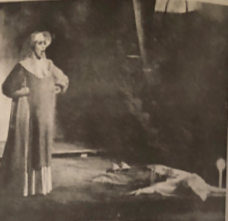
THE FIERY ANGEL / L'ANGE DE FEU
Opera in five acts and seven
tableaux, libretto by the composer from a novel by Valery Briusoff (published
in Russia in 1907). First complete performance (in concert) at the Théâtre des
Champs-Elysées. Paris. 25 November 1954, with Lucienne Marée, Xavier Depraz,
conducted by Charles Bruck (French translation by André Michel). Stage
première, Venice. 14 September 1955, with Dow, Panerai, conductor Sanzogno
First performed la Scala. 1957, with Goltz, Paneral, conductor Sanzogno:
Spoleto, 1959, with Gencer Panerai, conductor Kertess: Opéra-Comique. Paris,
1964, with Cavalli, Julien Haas, conductor Sebastien: Sadler's Wells, 1965, by
New Opera Company with Collier, John Shaw: Frankfurt. 1969 (and Edinburgh
Festival, 1970), with Anja Silja. Rudolf Konstantin, conductor Christoph von
Dohnanyi (omitting the end of Act II and the whole of Act IV). Adelaide
Festival. 1988, with Josephine Barstow, Rodney Macann, conductor Stuart
Challender, producer David Pountney, Covent Garden. 1992 (co-production with
Kirov. St Petersburg), with Galina Gorchakova. Sergel Leiferkus, conductor
Edward Downes. producer David Freeman.
Prokofiev worked on The Fiery Angel between 1920 and
1926, beginning it, that is to say, in America after the failure of The Love
for Three Oranges. The strongly romantic subject is in great contrast to the
ironic rationalism more usually associated with him, but he seems to have been
over-whelmed by the possibilities of the story. so that, without immediate
prospects of production, he shut himself up from March 1922 for eighteen months
at Ettal near Oberammergau, where, as he says, the action might have 'taken
place in the back yard. In the event, the opera seems to have been accepted by
Bruno Walter for Berlin in 1926, revised then but never performed. Koussevitzky
played an Interlude and the Agrippa scene at a concert in Paris three years
later, and the composer planned but did not carry out an extensive revision in
the early 1930s. including a re-write of the libretto. The work was then
mislaid and its existence even partially forgotten until it turned up in Paris
after the composer's death. Prokofiev himself had in the meanwhile used some
music from it for his third symphony.
The Fiery Angel belongs to the epoch of Wozzeck. but
even that masterpiece among products of the post-Freudian era hardly surpasses
it in its capacity to evoke and portray neurasthenia. But here a distinction
must be made. Wozzeck belongs to a different world from the one inhabited by
the émigré Prokofiev. His adopted Paris was dominated by Stravinsky's
Neoclassicism, the ironies of Cocteau and Satie, the new exploits of Les Six:
and the Germany where he retired to write The Fiery Angel by the opulence of Richard
Strauss, with apparently at the time no more than minority dissension on the
part of Schoenberg and his adherents on the one hand and Hindemith on the
other.
The work is allegorical on two simultaneous levels. On
one plane, Renata symbolises the struggle between good and evil, and the
capacity to believe that evil is good and to act on this belief. She is haunted
by visions of an Angel, and her passion for him amounts to obsession: to her he
is Good, and no one else she meets is of any significance, except as help in
her search for the Angel, or his physical embodiment, Heinrich. On another
level. this is the account of an all-absorbing (for Briusoff, autobiographical"),
but ultimately unsuccessful love affair. seen through the suffering eyes of the
male, but more damaging in the final analysis it would appear for the female
protagonist than for him.
Musically, the work is dominated by two themes
associated with Renata, which with their derivatives occur throughout (Ex. 1
and 2).
Act I
A room in a shabby inn. The hostess conducts Ruprecht to his room for the
night. He hears hysterical and terrified imprecations coming from behind an
apparently disused door, forces it, and Renata, distraught and dishevelled.
throws herself into his arms for protection, continuing to defend herself
against her unseen attacker even after Ruprecht has drawn his sword and made
the sign of the cross. The music vividly portrays her exhaustion as Ruprecht
prays and her terror abates.
She tells her story in an extended narration of
considerable musical splendour. It was when she was eight that an Angel first
appeared to her, dressed in white with blue eyes and golden hair and surrounded
by flames. His name was Madiel and he appeared to her day and night, eventually
announcing to her that her destiny was to be a saint. When she was seventeen,
her urgent desire for carnal love drove him away, to her utter despair, but
eventually he told her in a dream that he would return. As soon as she saw
Count Heinrich she knew, in spite of his denial, that he was Madiel in human
form. There ensued with Heinrich a year of happiness such as had never been
since Eve was expelled from Paradise. In the end he abandoned her, and now
Ruprecht has saved her from the fiend who has pursued her with visions and
nightmares ever since.
The noise attracts the attention of the hostess and
her servant. Renata is a loose woman, the hostess explains to Ruprecht; she
bewitched the Count and tormented the villagers, and now she must leave the
inn. Ruprecht shrugs his shoulders and decides that, once the hostess goes,
this attractive girl, witch or no witch. shall be his. As she looks out of the
window yearning for Heinrich, Ruprecht unsuccessfully tries to seduce her. He
quickly abandons the attempt, but from that moment Ruprecht becomes as involved
in the search for Heinrich as Renata herself.
When the hostess brings in a fortuneteller, the
contrast with Renata is intentional; the one is up to all the tricks of the
trade, the other attracted to sorcery only as a means to an end. The act ends
with an impressive musical scene, in which the old fortune teller makes obscure
references to Renata's guilt.
Act II
Cologne. The Introduction features the theme of Ruprecht's disappointment.
Renata is alone reading a book of magic when Ruprecht comes in. complaining
that the week they have been in the city has been spent only in feverish search
for Heinrich: they have looked in every church, in each narrow street, they
have tried magic, but all to no avail. Without Heinrich she cannot live, is her
answer. Jakob Glock has been commissioned to bring more books of magic, and
Renata fastens on them. telling Ruprecht that, despite his uncomplaining love,
beside Heinrich he is nothing: were she to be walking with Heinrich and to find
Ruprecht's body self-slain in the gutter, she would take no more notice than to
ask for its removal.
Renata burns magic herbs, and soon a knock is heard on
the wall-it is a spirit, she says, announcing the arrival of Heinrich. With
some remarkable divisi writing for the strings, Prokofiev expresses Renata's
obsession in a scene that is musically of very striking quality with, in its
total effect, something of the drama and irresistibility of Berlioz's Cours à
l'abime.
The door opens, but the music subsides to importence
and Ruprecht finds nothing. Renata collapses weeping, while Ruprecht swears he
will compel the spirits to aid her in her search. Glock reappears; he will take
Ruprecht to speak with the philosopher-magician, Agrippa von Nettelsheim.
A fine symphonic interlude takes us to Agrippa's
studio, where he sits surrounded by books, bottles of medicine, human
skeletons, and three black dogs. In a scene whose impressive music cap even the
feverish excitement of its predecessor. Agrippa reveals himself as a master of
the diabolical arts, 'cold and steely, immensely powerful and terribly
convincing. Here is damnation'.' As a philosopher, however, he refuses to help
Ruprecht. The first scene of Act II pro- vided most of the music for the third
movement of Prokofiev's third symphony (a scherzo 'dénué de gaieté' the
composer called it), and the interlude and second scene for the last movement.
Act III
Renata is in despair outside the door of a house. It is Heinrich's; she has
seen him and been rejected. Ruprecht returns from his encounter with Agrippa
and hears the story of Renata's volte face - she no longer loves Heinrich, who,
she is convinced, was an impostor, not the embodiment of her Madiel. If
Ruprecht will kill her seducer, she will be his and follow him wherever he
goes. Ruprecht demands entrance to Heinrich's house, while Renata offers up a
prayer to Madiel for forgiveness that she mistook Heinrich for him and for
strength for the future. It has the force of a great aria of dedication.
Ruprecht can be seen at a window as he challenges
Heinrich, who in appearance is the very incarnation of all that Renata has ever
ascribed to Madiel, a true angel of fire. Renata is overwhelmed at the sight of
him, and when Ruprecht reappears, in another complete change of heart, she
forbids him to shed a drop of Heinrich's blood, rather to let himself be
killed.
An interlude depicts the duel (part of it can be heard
in the first movement of the third symphony). At its end. Ruprecht is
discovered lying seriously wounded on the banks of the Rhine, where Renata
tends to him, and in a lyrical aria sings of her love, swearing that if he
dies, she will enter a convent. After Renata's berceuse, delirium (Ruprecht's
from his wound? Renata's from her obsession? - it is the only moment of the
story when Renata and Ruprecht are musically at one) suddenly seizes both in music
of uncanny intensity, a chorus of women behind the stage commenting ironically
the while on the instability of love. A doctor who has been fetched by Mathias
pronounces that Ruprecht will live.
Act IV
In a public garden, Renata tells Ruprecht, who has hardly recovered from his
wound, that she must leave him; to accomplish the salvation of her soul, she
must take the veil. When Ruprecht protests his love for her, she tries to
commit suicide, turning the attack on him as he tries to prevent her.
Mephistopheles and Faust have come into the garden and watch the scene. When
the potboy, in response to their order, only brings wine. Mephistopheles
threatens to swallow the child, and later at a gulp makes good his boast,
subsequently restoring him to life at the request of the innkeeper.
Act V
The act starts with some beautiful slow music (in Symphony No. 3, the subject
of the second movement), chanted by the nuns of the convent of which Renata has
become a member. The music is the more welcome by its contrast with the frenzy
which has preceded it. The same abstraction from the world is apparent when the
Mother Superior asks Renata about her visions: has she seen evil spirits? No,
says Renata, she always turned her back on them. The fact remains, the Mother
Superior points out, that since she entered the convent, the place has been in
an uproar, full of strange noises and the sisters attacked by devils.
The nuns in the meanwhile have filled one side of the
crypt, and now the Inquisitor and his followers enter to examine Renata. He
asks her to furnish him with proof that her visions have never been inspired by
Hell. The spirit who visits her, she tells him. has always spoken of virtue, of
the importance of the life to come- are these the words of the devil?
Immediately two young sisters cry out in terror, knocks are heard on the wall,
and the scene becomes one of pandemonium as one group after another is caught
up in the general turmoil, a few supporting Renata but most crying out against
her. The exorcism proceeds, but finally, as Mephistopheles and Ruprecht appear,
the nuns rush frenziedly at the Inquisitor and his supporters, and the opera
ends as he pronounces Renata a heretic and sentences her to death. The final
scene, with its intricate part-writing for the women against the cantus firmus
of the Inquisitor, is masterly in its effect and brings the opera to an
overwhelming conclusion.