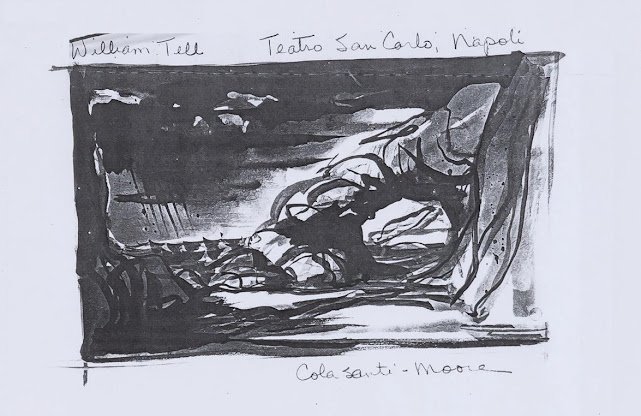
After his successes in the North of Italy. Rossini was in 1815 engaged by the famous impresario them, disguised as a boy, his secretly married wife. Matilda. The Queen takes them all into her service as pages. Alone, Leicester reproaches Matilda with her foolhardy behaviour as a relation of Mary, Queen of Scots, she is in great danger - in a duet ('Incauta, che festi?'), an immediate success at the première according to Stendhal. Matilda, who has revealed her knowledge of Elizabeth's love for Leicester, is left with her brother Henry, one of the hostages, to bewail her ill fortune in a mellifluous aria ("Sento un intorna voce").
The false Norfolk, under the pledge of friendship. learns from Leicester the secret of his marriage. Norfolk hastens to tell the news to the Queen, who herself has planned to marry Leicester and whose reaction to the news is expressed with a mixture of fury and dignity in the duet for her and Norfolk ('Perchè mai. destin crudele'). Its vigorous quick section foreshadows Guillaume Tell or even early Verdi.
In a few bars before the finale begins, Elizabeth orders Fitzwilliam, who already suspects Norfolk's perfidy, to have the guard stand by and sends for Leicester and the Scottish hostages. Matilda she quickly recognises from her obviously anxious manner, and she proceeds to confront Leicester as her principal adviser and the hero of the moment. When she offers to make him her Consort, he is thrown into complete confusion and tries to refuse. The Queen flies into a passion. denounces the unhappy pair and summons the guard to arrest them. The finale, described by Stendhal as magnificent. is an impressive piece, at one moment full of sound and fury, at the next reminiscent of Mozart.
Act I For the overture Rossini borrowed from his own less successful opera Aureliano, a trick he was to repeat less than two years later when he used exactly the same piece of music for Il Barbiere di Siviglia, the one overture thus doing duty for three operas.
Leicester's military triumph in Scotland is being celebrated at the Palace of Whitehall in London, where Norfolk makes no attempt to hide his jealousy. The Courtiers salute the Queen, who greets them in dignified (and florid) music and gives vent to her feelings of joy in music hardly distinguishable from “Io sono docile' (Barbiere)-there are a few, but a very few, differences between the two arias, written only eighteen months apart. Leicester is announced, proclaims the defeat of the Scots and is welcomed by the Queen, to the chagrin of Norfolk. Leicester says he has brought the sons of the nobility as hostages from Scotland, but. in an aside, cannot hide his surprise at seeing among understanding orders the banishment of the false Norfolk, whose duplicity she has now seen through. Outside the Tower of London, people lament the impending fate of Leicester, and there follows a scene in which Norfolk, now under sentence of exile, tries, in an aria with chorus, to act the part of rabble-raiser.
An evocative prelude leads us to a dungeon in the Tower, where Leicester laments his fate. Flute and coranglais continue the tale of his uneasy, half-voiced dreams. The false Norfolk brings him promises of help; and their florid duet, 'Deh, scusa i trasporti', is something of a rarity, an extended movement for two tenors. To the prison comes the Queen, anxious to see her favourite before his execution. Norfolk has meanwhile concealed himself, and Matilda and Henry have managed to insinuate themselves into the dungeon. Leicester hears that it was Norfolk who accused him, the Queen comes to understand the extent of Norfolk's treachery, and Norfolk himself draws his dagger and is about to stab the Queen when Matilda throws herself in between them.
In the splendid and (Stendhal tells us) in its day much admired finale, the Queen denounces Norfolk and condemns him to death, then, in a slow and increasingly decorated section in triple time ('Bell'alme generose'), turns to Matilda and Leicester and, in gratitude for their loyalty, grants them their freedom. The voices of the people pleading Leicester's cause can be heard from outside, Elizabeth shows them their liberated hero, and the opera comes to an end with roulades from the Queen, who is acclaimed by the crowd.
Act II Elizabeth sends for Matilda and demands. in what is perhaps the finest scene of the opera, that she signs a paper renouncing all claim to Leicester in return for the safety of her husband and her brother ('Pensa che sol per poco sospendo l'ira mia"). Stendhal describes at some length the great success in this scene of Colbran for whom (or for her Royalist connections) he usually reserves little but scorn. Bellini may well have taken the duet, particularly its slow second section, as a model for his famous 'Mira, o Norma'. Enter Leicester to read the document, to defy the Queen by tearing it up, and to turn the splendid duet into a no less notable trio. They are led off under arrest, but the Queen in a moment of revulsion and Domenico Barbala to work for the San Carlo in Naples.' Barbala, who had recently rebuilt the theatre after it had burnt down and was in high favour with King Ferdinand, is one of the most extraordinary figures in the history of opera. He started life as a waiter, was the first to think of mixing whipped cream with coffee or chocolate, speculated in army contracts during the Napoleonic Wars, and made a fortune at the gambling rooms in Milan. He is traditionally supposed to have been illiterate, but there is no doubt as to his brilliant success as an impresario- no contradiction involved, maybe, either.
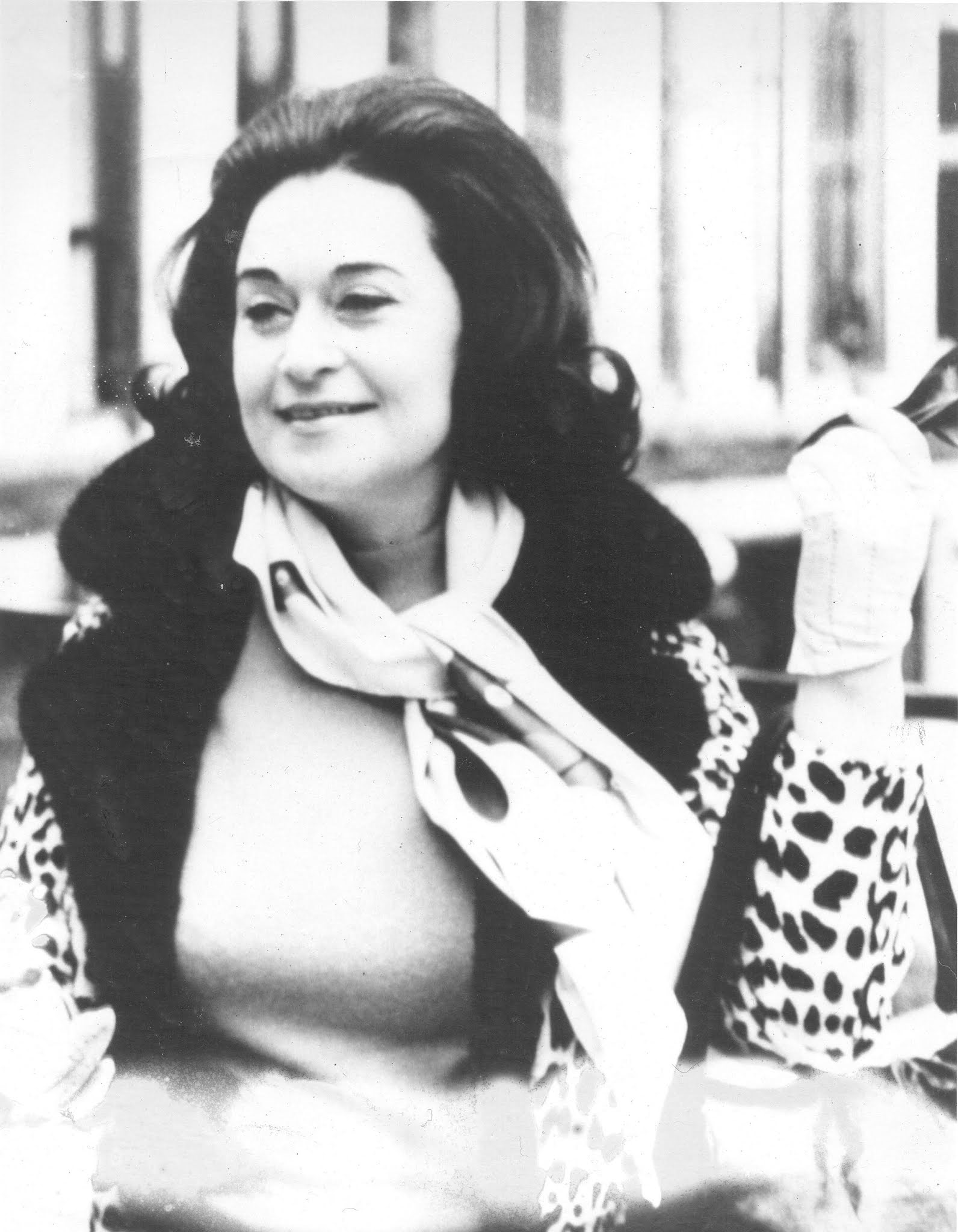
The libretto of Rossini's first opera for Barbala was adapted from a contemporary play, which had been taken from an English novel called The Recess written by a certain Sophia Lee in 1785. Rossini wrote it for Isabella Colbran. Barbaia's mistress and later to become the composer's wife. It has two noteworthy musico-historical features: for the first time Rossini gave his recitatives orchestral accompaniment throughout, and, also for the first time, he wrote out all the vocal ornaments in full-he had heard the castrato Velluti indulge in such prodigality of ornamentation in Aureliano in Palmira that he became alarmed at what a less musical singer might do. Rossini was writing for a new audience, and he would leave nothing to chance in his efforts to conquer it.